Podcast

Showing posts sorted by relevance for query Julius Caesar. Sort by date Show all posts

Friday, June 30, 2023

37 Days of Shakespeare, Day 4: Julius Caesar

Julius Caesar, first broadcast February 11th, 1979
  • When was it written? It was first performed in 1599, possibly his 19th play
  • What’s it about? Brutus joins a conspiracy led by Cassius to assassinate Julius Caesar, to prevent him from becoming a tyrant. Caesar's right-hand man Marc Antony stirs up hostility against the conspirators and Rome becomes embroiled in a dramatic civil war.
  • Most famous dialogue: Either “Friends, Romans, countrymen, lend me your ears!” or “Et Tu Brute”.
  • Sources: The main source is Thomas North’s translation of Plutarch’s Lives. Ben Jonson famously carped that Shakespeare had “small Latin and less Greek.” Instead, he was among the first generation of English speakers to have the classics available in translation, and it turned out that democratizing those works meant that little-educated men of genius could now find them and make more great art out of them.
  • Interesting fact about the play: Shakespeare was never very faithful to history, but he’s a bit too faithful here, because one of the jobs of a writer is to make sure that not too many characters have names that begin with the same letter. This play, however, has an astonishing thirteen characters with “C” names: Julius Caesar, Cinna, Casca, Caius Cassius, Cicero, Caius Ligarius, Calpurnia, Matellus Cimber, Publius Cimber, Cinna the poet, Claudius, Octavian Caesar and Clitus!
  • Best insults: Once again, I can’t do just one:
    • “He’s a tried and valiant soldier.” “So is my horse, Octavius”
    • “A barren-spirited fellow”
    • I am completely baffled by the first half of this insult but I like the second: “He loves to hear that unicorns can be betrayed with trees, and bears with glasses, elephants with holes, lions with toils, and men with flatterers, but when I tell him he hates flatterers, he says he does, being then most flattered.”
  • Best word: Accoutered
  • Best production of this play I’ve seen: The Marlon Brando movie is good, but I have never seen a good production on stage. The worst production I’ve ever seen of any play was a post-apocalyptic version of this one, which included, among other highlights, an interpretive dance to Oasis’s Wonderwall.
  • Notable Names in the BBC Adaptation: Once again, we have Charles Gray (Blofeld in Diamonds are Forever, Rocky Horror Picture Show), this time as Caesar. None of the other actors were familiar to me.
How’s the cast?
  • Gray seems too old and out-of-shape to be a dangerous tyrant, and he’s kind of blank, but Caesar himself is kind of a blank in the play, as I’ll discuss later. Richard Pasco as Brutus and David Collings as Cassius both deliver nicely complex characterizations. Keith Mitchell as Marc Antony seems to lack the cunning the part requires (and that Brando conveyed well).
How’s the direction from Herbert Wise?
  • Alas, after a splendid outdoor production of “As You Like It”, we’re very much back indoors here, with an interminable number of scenes set on every side of a huge Styrofoam rock. Wise doesn’t do a good job making it feel like a real war is going on in the second half, but in the first half, I liked how volatile and chaotic his crowd scenes were. I liked how he wasn’t shy about all the blood, with a very long scene (pictured above) in which the actors are basically slipping around in pools of it. The long night of thunder and lightning was well-conjured and properly portentous. It’s always a lame choice, however, to have the soliloquies done as voiceover, since the poor actor is left with nothing to do.
Storyteller’s Rulebook: Always Let Your Audience Decide

I was surprised to discover that this felt like the weakest of the four plays I’ve looked at so far. It’s certainly far more famous and quotable than Richard II, but that one seemed more morally and emotionally complex, because Richard, unlike Caesar, was a three-dimensional character, a complex construction of flaws and virtues tightly enmeshed together, and we were invited to judge for ourselves whether or not he should be overthrown (which turns out to be a hard decision to make). In this play, we just don’t get enough of the title character.

I think the decision not to show us the scene where Caesar refuses the crown three times is a baffling one. Instead, we just overhear the huzzahs, and then we have Casca arrive and sum up what happened though his own jaundiced POV. The whole rest of the play turns on whether Caesar was being genuinely humble by refusing the crown or just feigning humility to seize power. Let us see the scene and decide that ourselves, as we got to do with Richard. Let us see why Brutus and Cassius would see it one way and Marc Antony would see it the other, and let us contrast that with our own independent opinion on the scene.

I will say that the strongest element of the play is its examination of the volatile madness of crowds, and the masterful scene in which Antony plays the crazed crowd like a fiddle is the play’s peak. Ultimately, nobody comes off very well in this play, neither the conspirators nor those who would avenge Caesar. The most sympathetic character is poor Cinna the poet, killed by a mob because he has the same first name as one of the conspirators.

Thursday, March 28, 2024

37 Days of Shakespeare, Day 18: Antony and Cleopatra

The Tragedie of Antonie, and Cleopatra , first broadcast May 8th, 1981
  • When was it written? 1606-1607. Possibly his 30th play.
  • What’s it about? Antony, last seen in Julius Caesar, has become enamored of Egyptian queen Cleopatra and ignores his duties, but his co-ruler Octavian calls him home to help deal with various threats to Rome. Antony and Cleo eventually decide to rebel against Rome and both wind up dead.
  • Most famous dialogue: “Age cannot wither her, nor custom stale her infinite variety”
  • Sources: Plutarch’s Lives, specifically Thomas North’s translation (which was an English translation of a French translation of the Attic Greek original.) Shakespeare takes whole passages, but also makes up some things.
  • Best insult: Not a lot of great insults in this one. Just a few: “Ah, you kite”, “You have been a boggler ever”, “Triple-turn’d whore!”
  • Best word: weet, foison
  • Best production of this play I’ve seen: I read it in college but I’ve never seen it performed.
  • Notable Names in the BBC Adaptation: Colin Blakely as Antony showed up in a lot of stuff. You’ve seen him before.
How’s the cast?
  • The most disappointing thing about the cast is that they didn’t carry over Antony and Octavian from their production of Julius Caesar. I think this play becomes a lot more interesting when it’s treated as a sequel to that play, showing Antony’s devolution from manipulator to manipulated. As it is, Blakely does a good job and Jane Lapotaire ably brings to life Miller’s lusty interpretation of Cleopatra.
How’s the direction by Jonathan Miller?
  • Miller produced the whole season and this is the third we’ve seen him direct, though apparently it was shot first. Unlike Timon of Athens, he doesn’t insist on Elizabethan dress, thankfully. Unfortunately, he said in interviews that he saw Cleopatra as just a “treacherous slut” and that dismissive attitude infects the production. If he’d had more respect for Cleopatra, it would have been a better show.
Storyteller’s Rulebook: You Can Only Draw It Out So Much

This production is almost three hours, but the war is over at the 2 hour mark. The final hour is dedicated to the two most overwrought death scenes in all of Shakespeare (or at least the half we’ve read so far). It plays a little camp in this version, and it would be hard to imagine it not seeming over the top unless it was cut down. If Shakespeare is to be believed, one of the world’s top causes of death is failing to understand that other people were faking their deaths. Just don’t fake your deaths, kids.

Storyteller’s Rulebook: Gendering Flaws is a Problem

Was Miller right to see Cleopatra as just a “treacherous slut”? Was there more in the text he could have plumbed? I would say there’s room for a more sympathetic portrait here, but it’s certainly true that Shakespeare slights the actual historic figure. The real Cleopatra was not only a political genius but a flat-out genius-genius. She spoke 8 languages! Shakespeare doesn’t give an actress room to play that.  His Cleopatra is undeniably petulant, flighty, and sex-obsessed (“Oh happy horse to bear the weight of Anthony!”) 

 Of course, his male heroes are all deeply flawed as well. It’s not like there are any moral paragons in Shakespeare, but because he has only three female title heroes (Juliet and Cressida being the others), it becomes more of a problem that Cleopatra’s many flaws are gendered as female. Knowing how kick-ass the real Cleopatra was, it’s natural to want her to be more sympathetic here, even if that might be too much to ask of any of Shakespeare’s universally-flawed heroes.

Alright, that’s the end of Season 3 of the BBC show, and I’m once again barded out, so I will take another break for a while. I’m not crazy about Miller taking over the show and only loved one of the six in this season (Timon). There’s some great material coming up in Miller’s second and final season, so let’s see how he does with that.

Thursday, December 11, 2025

What Should’ve Won That Could’ve Won: 1953

The Year: 1953
What the Nominees Were: From Here to Eternity, Julius Caesar, The Robe, Roman Holiday, Shane
Other Movies That Should Have Been Considered: America was still producing great noirs like The Big Heat and Pick-Up on South Street, but the Academy wasn’t noticing. Overseas, Federico Fellini turned out his first masterpiece with I Vitteloni, but it’s not the sort of movie that would have caught Hollywood’s fancy.
What Did Win: From Here to Eternity
How It’s Aged: Montgomery Clift is good as always, and Burt Lancaster and Deborah Kerr making out in crashing waves is a lot of fun, but ultimately this is a little too soapy for my taste. I rewatched it just to be sure and wasn’t very impressed. The overwrought deaths just got an eye-roll from me.

What Should’ve Won: Roman Holiday
How Hard Was the Decision: I’m always somewhat reluctant to take it away from a serious movie in favor of a more frivolous picture, but this is a shockingly good piece of fluff, so it wasn’t that hard.

Director: William Wyler
Writers: Dalton Trumbo and John Dighton. Story by Dalton Trumbo. Originally, credit onscreen was given to Ian McLellan Hunter who was acting as a “front” for the blacklisted Trumbo. McLellan’s Oscar was finally handed over to Trumbo’s widow in 1993.
Stars: Gregory Peck, Audrey Hepburn and Eddie Albert
The Story: A princess visiting Rome decides to run away and explore the city, not realizing that she’s been given a sleeping draught by her doctor. Passing out, she is taken in by a reporter, who soon realizes who she is and takes her around the city for adventures with his photographer pal, planning to sell the story for a fortune. When she realizes she must return home, he decides to kill the story and return the photos.

Any Nominations or Wins: It lost Picture, Director, Supporting Actor, Screenplay, Art Direction, Cinematography and Editing. It won Actress, Story, and Costume Design for Edith Head’s gorgeous gowns.
Why It Didn’t Win: This is my third pick in a row with a newly-blacklisted screenwriter! I guess I just like commies. Yet again, that hurt this movie’s chances, but it was more likely that this was a light romance, which the academy has never approved of very much.

Why It Should Have Won:
  1. The studio, of course, wanted to shoot it all on the backlot (“What, that was good enough for Casablanca, so why is it not good enough for you??” they probably asked), but Wyler fought to shoot in Rome, which accounts for a huge amount of the movie’s appeal. It’s hard to tell what’s more charming, Hepburn or the city itself.
  2. Peck’s agent insisted on his client being the only one billed above the title, as you would expect any agent to do, but Peck told him to lay off. When asked why, Peck responded “Because she’s going to win Best Actress for her first movie.” He was right and it is to his enormous credit that he realized it ahead of time, and let Hepburn be the star she was destined to be. What makes her performance so great is her mixture of lovely vulnerability with just enough willpower to get herself into trouble (and out of it).
  3. The best scene in the movie is when Peck encourages Hepburn to stick her hand in the Mouth of Truth, and it’s all down to Hepburn’s performance. When you’re living a lie, you become irrational in fear of exposure, and Peck is having a fun time teasing her about that. When Peck reveals his hand hasn’t been bit off, Hepburn and the audience both explode with delight.
  4. Over the course of this project, I’ll be taking away all three of Wyler’s Best Picture wins (Mrs. Miniver, The Best Years of Our Lives, and Ben-Hur), but I’m more than happy to give him this one to make up for it. This film is not as capital-I important as those three, but his famous perfectionism was just as valuable in service of this airier fare. He proves to be equally adept at a light touch as he was with a heavy hand.
  5. Every single book published in the “romance” genre ends with the couple happily united, but almost every movie we think of when we hear the words “romance movie” ends with the lovers separated, permanently or not (Casablanca, Love Story, Titanic). Why did the screen decide it was more romantic to separate lovers but the print genre exclusively decree that lovers must end up together? (The fact that the lovers do not end up together in this one, I would say, puts it more in the “romance” than “romantic comedy” genre, where the lovers do end up together.)

Ah, 1953: What Could Go Wrong?

Monday, August 18, 2025

37 Days of Shakespeare, Epilogue: The BBC Power Ranking Countdown

Already, kids, I spent years doing my Shakespeare series, and you thought it was done, but I wanted to do one final wrap-up today, where I rank the whole BBC series, in countdown format. My opinion of the plays themselves and these productions specifically are all mixed up with each other here. Unfortunately, the series is no longer easy to watch, as it has just disappeared off BritBox, so you’ll have to get the DVDs (perhaps from your local library) or acquire it in, ahem, other ways.  Click on the title to see my write-up of each production. 
  • In 37th place, Titus Andronicus: Director Jane Howell, who will also be seen near the top of the list, cannot overcome the tastelessness of the material, and “spooky” cross-dissolves just feel tacky.
  • 36th, Troilus and Cressida: Director Jonathan Miller stages the whole thing as a comedy but nothing is remotely funny, causing the play to feel like a tonal disaster. Broad gay stereotypes don’t help. And it’s just a weak play. It surely seems like Shakespeare didn’t finish it. It has no ending!
  • 35th, King John: Not so much bad as completely forgettable. I may remember a scene outside a castle?  A few months after watching it, I would not be able to pass any pop quiz about this play.
  • 34th, Henry VIII: Shameless Tudor propaganda that distorts history to a ridiculous extent, but a somewhat nice production shooting on actual outdoor locations.
  • 33rd, Cymbeline: Plagued like so many of these plays by Elizabethan dress despite Roman times setting, this production failed to capture the nuttiness or martial thrills of Shakespeare’s play. That severed head was never going to look good in close-up.
  • 32nd, The Taming of the Shrew: It’s fun to see John Cleese doing Shakespeare, but it just spotlights the essential problem of the text, which is that we no longer consider spousal mental abuse to be funny. Sarah Bedel as Katherine plays it rather serious, resulting in a major tonal mismatch.
  • 31st, The Merchant of Venice: Shakespeare’s other super-offensive play gets a rather lively adaptation, with some genuine comedy thrown in there, but the inherent anti-Semitism of the material is only highlighted, not recontextualized in any way.
  • 30th, All’s Well That Ends Well: Director Elijah Moshinsky’s only real mistake is to play the king scene as a sex scene, but he makes up for it with a very funny gibberish scene. The Helena - Bertrand reconciliation is unconvincing, of course, but it always is.
  • 29th, Pericles, Prince of Tyre: Period-appropriate dress for once, and epic filmmaking on a shoestring video budget make for a rousing production of a weak play.
  • 28th, Antony and Cleopatra: Director Jonathan Miller said in an interview that Cleopatra was just a “treacherous slut” and that attitude infects this production. More respect for her character would have gone a long way. Colin Blakely makes a fine Antony and the dress is once again blessedly period appropriate.
  • 27th, Coriolanus: One of the weakest plays gets a glow-up from Moshinsky, with the most gorgeous lighting of the series. The homoerotic interpretation of the not-particularly-gay text is certainly …interesting.
  • 26th, The Tempest: We’re getting into the better ones here. The cheapo special effects and homoerotic (there’s that word again) choreography on this one were both charming, and Michael Horden is excellent as Prospero.
  • 25th, The Winter’s Tale: Jane Howell’s abstract stagework makes a weird play even weirder. It’s beautiful, but can’t smooth out the play’s wild tone shifts and egregious violation of the Aristotelean unities.
  • 24th, Measure for Measure: Gravely serious performances from Kate Nelligan and Tim Pigott-Smith as the leads, alongside funny work from the other actors, somehow all comes together for a zesty final product.
  • 23rd, Julius Caesar: Our first great text we’ve gotten to on this list receives a decent adaptation, with a good Brutus, Cassius and Anthony. Poor Cinna the Poet ends up being the only really sympathetic figure, but that doesn’t violate the text.
  • 22nd, Macbeth: A great text, and well-acted, but tacky sets, lighting and camerawork undercut the performances. There are much better adaptations of this play.
  • 21st, The Two Gentlemen of Verona: Ignore the Shaun Cassidy hair on the lead actor Tyler Butterworth, and this is a very engaging staging of an underrated play, mixing drama and comedy perfectly.
  • 20th, The Merry Wives of Windsor: How wonderful to get to see Richard Griffiths as Falstaff, a part he was born to play, and Ben Kingsley is excellent as well as Frank Ford. Not Shakespeare’s best comedy, but the cast and director David Jones mine it for all its humor.
  • 19th, Henry IV, Part 2: The first half of this play is quite forgettable, but it’s always good to just watch Falstaff be Falstaff. Anthony Quayle is great as the cowardly knight, and David Gwillim and Jon Finch are quite good as father and son Henrys.
  • 18th, Love’s Labour’s Lost: Another underrated play gets a brilliant adaptation by Moshinsky, playing up the similarities to the works of Moliere by setting it late in the 17th century. Genuinely funny and sharply satiric of the enlightenment that was on its way.
  • 17th, Much Ado About Nothing: One of Shakespeare’s best plays gets a lively adaptation with great sets. It can’t withstand comparison to Kenneth Brannagh’s version, but that’s an unfair standard. Robert Lindsay’s Benedick and Cherie Lunghi’s Beatrice do a good job keeping things effervescent until things darken, and they handle that nicely as well.
  • 16th, Romeo and Juliet: The first episode got the series off to a rousing start, with lots of swordplay and swooning. Authentically casting 14-year-old Rebecca Saire as Juliet reminds us that this relationship isn’t a great idea, even before it ends so badly. And of course it’s great to see Alan Rickman as Tybalt, promising a lot more “no small parts” cameos to come.
  • 15th, Henry V: Gwillim as Hal doesn’t have Quayle as Falstaff to support him this time, but he proves he can carry a production by himself as an inspiring-but-still-somewhat-callow king.
  • 14th, Richard II: For the most part, the series failed to land the legendary Shakespearean actors I really wish we could have seen, but this and Hamlet, both starring Derek Jacobi, are exceptions, and they don’t disappoint. One of the big benefits of the series is to do the histories with consistent casting, so we get to meet Finch’s Henry IV here at the beginning of his journey and follow him to his death two plays later.
  • 13th, Othello: What do we do with this play? Really, it should be ranked dead last for the egregious sin of doing the part in blackface, but once we roundly condemn that, there’s the uncomfortable fact that, other than that, this is an excellent adaptation, with Anthony Hopkins doing his typical great work in the lead and Bob Hoskins even better as a bitterly-laughing Iago.
  • 12th, King Lear: One of the greatest plays, certainly, but I’m ranking these based on both quality of the play and quality of the production, which drags this down a bit. Director Jonathan Miller once again uses Elizabethan costume and the sets are tacky, but the performances are great.
  • 11th, Henry IV, Part 1: One of the all-time great plays gets an excellent adaptation. Griffiths was so good as Falstaff in Merry Wives of Windsor, and it would have been fascinating to see if he could have carried off the, ahem, heftier version of the character in the History plays, but I can’t complain about Quayle, who plays the character with an emphasis on the sadder side of the comedy.
  • 10th, Twelfth Night: One of the best plays is blessed by a sprightly performance by Felicity Kendal as Viola, including a very funny swordfight. Director John Gorrie’s production is almost too boisterous, but that’s not a bad problem to have.
  • 9th, The Comedy of Errors: The brilliant decision to do it Patty Duke-style, with the same actors playing each set of twins, completely transforms the play, making it believable for once that everyone would get so confused. A very funny performance on a beautiful set. Roger Daltrey of The Who is shockingly good as both Dromios.
  • 8th, Hamlet: Derek Jacobi is back and it’s great to get his melancholy Hamlet preserved on film (well, video anyway). And Patrick Stewart (with hair!) is fascinating as an even-keeled Claudius. It’s a long full-text version of this usually-cut-down play, and overstays its welcome a bit, but you can’t complain with a great cast and interesting minimalist staging from director Rodney Bennet.
  • 7th, A Midsummer Night’s Dream: The teenagers and the players are both very funny in this high-spirited performance (kept under two hours by overlapping the dialogue.) Puck, meanwhile, is an angry punk, which is a fascinating interpretation. It would have been great to set this one outside, but director Moshinsky does a fine job with the interior sets he has.
  • 6th, As You Like It: The one production that matches what the original plan was for the series, before they gave up on shooting outside. A youthful Helen Mirren leads a cast cavorting on the grounds of Glamis Castle. With David “Darth Vader” Prowse as the wrestler! My one objection is that they make no attempt to make Mirren look like a boy when she’s in drag.
  • Tied for 2nd place, Henry VI, Parts 1, 2 and 3, and Richard III: Ultimately, I just couldn’t break up this brilliant 14-hour quartet, all directed by Jane Howell, so all four are sharing the #2 spot. All done on one set, we start with a brightly colored child’s playroom and then follow the doomed country of England as it goes from playful contests of chivalry to unleashing hell on earth. The set is gradually degraded until it’s pitch black, and in the end we end up with Julia Foster as Queen Margaret cackling atop a mountain of corpses. If you had asked me to guess before I started what my top five would end up being, I wouldn’t have been able to do it in a thousand tries. I had never seen the Henry VI plays, which are almost never staged. Having them share this spot on the list only reinforces the impression you probably have that they are inseparable. Indeed, this series makes a strong case for the greatness of these plays together, but I was left with the impression that they should be staged more often and that they could be staged individually. If Part I was simply retitled “Shakespeare’s Joan of Arc”, surely it would get staged more.
  • 1st place, Timon of Athens: This is generally considered one of Shakespeare’s worst plays, if not the very worst, but here it is sitting atop my list. Director Jonathan Miller makes a strong case for the play’s inherent greatness, but the quality of this production must be primarily credited to Jonathan Pryce’s bitterly rueful performance in the lead role. Miller’s daring decision to stage most of the second half as long unmoving takes creates a huge acting challenge but Pryce more than meets it. 
 Okay, folks, that’s it for Shakespeare posts! Hopefully the new 89-part follow-up series (I’m not even kidding) starts next week!

Friday, June 13, 2025

37 Days of Shakespeare, Day 32: Coriolanus

The Tragedy of Coriolanus, first broadcast April 21st, 1984
  • When was it written? Probably around 1608 or 1609, possibly his 31st play
  • What’s it about? Around the time of the founding of the Roman republic, general Gnaeus Marcius defeats the Volscian army at Corioli and gets the nickname Coriolanus. Returning home, many people encourage him to become a consul, but after he gives a disastrous speech his political rivals turn the common people against him and get him banished. He teams up with Aufidius, the Volscian general he defeated, and declares war on Rome, but his family is able to talk him out of it. He makes peace instead, and then Aufidius kills him.
  • Most famous dialogue: None
  • Source: The “Life of Coriolanus” in Thomas North’s translation of Plutarch’s The Lives of the Noble Grecians and Romans (1579).
  • Best insult: “You are no surer, no, than is the coal of fire upon the ice, or hailstone in the sun,” or “You common cry of curs, whose breath I hate as reek o’ the rotten fens, who loves I prize as the dead carcasses of unburied men that do corrupt my air”
  • Best word: mammocked
  • Best production of this play I’ve seen: I had never seen or read it.
  • Notable Names in the BBC Adaptation: Noted ‘80s bad guy Joss Ackland does a great job as Coriolanus’s only steadfast friend in Rome, Menenius. (His reading of “Down with that sword” is chilling.)
How’s the cast?
  • Alan Howard is a little stiff (no pun intended) as Coriolanus. Irene Worth is great as Coriolanus’s mother.
How’s the direction by Elijah Moshinsky? 
  •  This is the most beautifully lit play I’ve seen so far, looking very cinematic.  And Moshinsky makes a clever decision to have cramped sets that look dangerously crowded even with just a few people, to create the sense that the roiling mobs are always a threat.  But Moshinsky’s biggest decision is to make the production so homoerotic, so let’s talk about that below…
Storyteller’s Rulebook: I Say Again, Not Everything Has To Be A Sex Scene

Earlier in this series we had Derek Jacobi’s Richard II, who was coded as possibly gay, and was a little fey. Then we had Troilus and Cressida with three gay-coded characters, all of whom seemed like caricatures. Now we get this play. With less support from the text, Moshinsky has decided to portray Coriolanus and Aufidius as two very masculine gay men whose every scene together, including their scenes of violence against each other, are played like sex scenes.

On the one hand, it’s nice to have two gay characters where neither is coded as effeminate, but on the other hand, it’s a brutal vision of male love. The intense homoerotic atmosphere of their scenes never seemed to me to be supported by the text, and always felt like an imposition, perhaps motivated by a belief of Moshinsky’s that there just wasn’t enough to this play without it.

I don’t know enough about this play to know how common this choice is. Tom Hiddleston was filmed in the role recently, and now I want to check that out to see if he played it this way too, or if the role could be made rich enough without it.

Storyteller’s Rulebook: A Play For Our Times

As with Henry VI, Part 2, this play was hard to watch, given what’s going on in the country right now. Shakespeare served at the pleasure of his monarchs, and one of his recurring themes was the inherent stupidity of democracy. He had already written about the downfall of democracy in Rome in Julius Caesar, due to the fickleness of crowds, and now we jump back 500 years earlier and find that, even at the beginning of Roman democracy, the crowds were just as jittery and easily swayed for evil purposes. (“The beast with many heads,” as Coriolanus calls them)

(Of course, if you’re going to play a Shakespeare lead, you have to know how to give a speech well, but this role is unique because it also requires that you know how to give a speech poorly. Coriolanus’s clumsy attempt at public speaking is the turning point of the play, and actors must love the chance to get to blow it for once.)

I know that, as a citizen of a democracy, I should be offended by Shakespeare’s wild-eyed contempt for voters, but given what’s going on right now, it’s hard not to see these two plays, bookending the rise and fall of the Roman Republic, as accurate depictions of the inherent idiocy of voters.

Tuesday, December 05, 2023

The Expanded Ultimate Story Checklist: Do the characters refuse or fail to synthesize the meaning of the story?

Meaning must be created in the minds of the audience, not on the page, the stage, or the screen. While it’s tempting to preprocess your conflict and present your finalized synthesis to the audience (to control what their takeaway will be), there’s no point, because they won’t care. 

Modern Family can be an entertaining sitcom—as long as you turn it off two minutes early. At the end of each episode, you have to watch a member of the family come onscreen, look right at you, and point out how all three of that week’s storylines were really about the same big theme and how glad that person is to have learned so much. Any meaning the episode may have generated is quickly slaughtered by this clumsy exegesis.

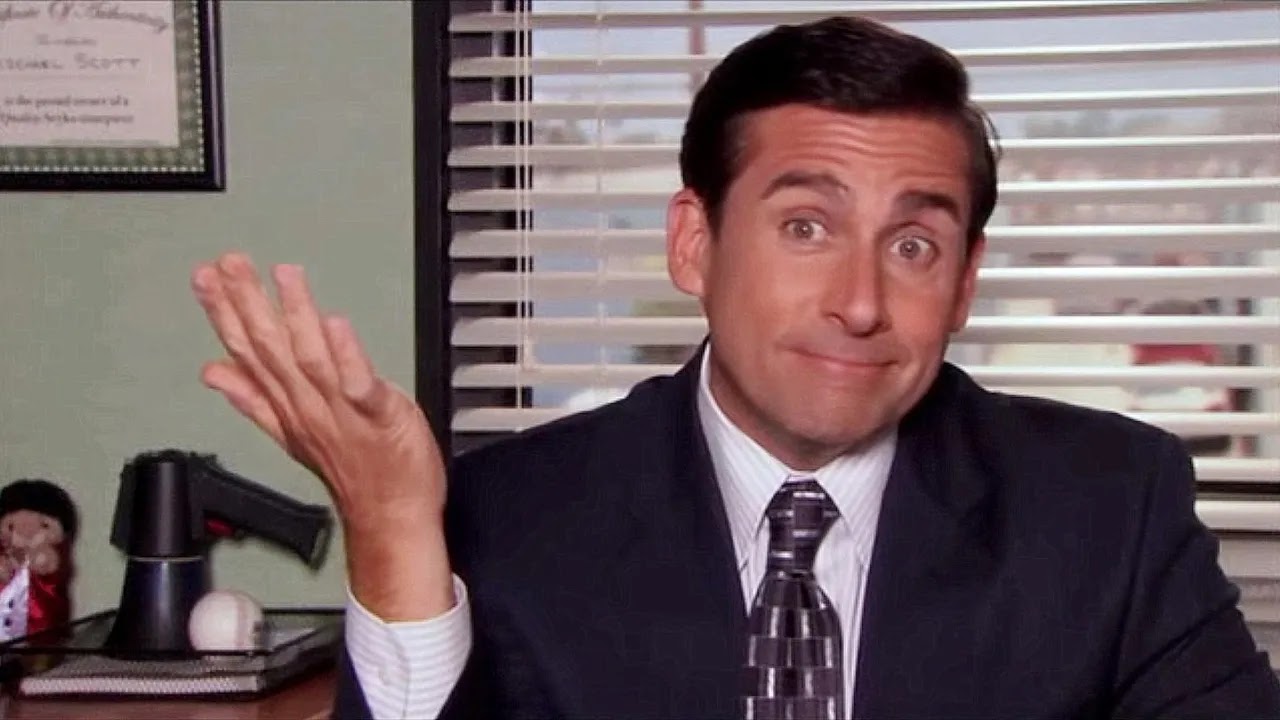
Compare this to any of the far-superior, documentary-style sitcoms this show mimics, especially the American version of The Office. Boss Michael Scott frequently appears at the end to sum up what meaning has been created by that week’s episode. But he gets it all spectacularly wrong and forces us to do the work.

You need to have the courage to let your audience draw their own meaning, even if that means they might not “get it,” or they might even come to the opposite conclusion you intended.

What were Shakespeare’s politics? In Julius Caesar, did he agree with Brutus or Marc Antony? Does he side with Prince Hal or Falstaff in Henry IV? No one knows. His plays are filled with huge ideological conflicts but few definitive statements. He gives us a thesis and antithesis and leaves the synthesis to us. That’s why he’s immortal.

Rulebook Casefile: Denying Synthesis in An Education
Yesterday, we looked at one reason why the “third act” of An Education is so short: the story isn’t as interesting once Jenny has dumped her con man fiance, and we don’t want to watch her study for her tests.  That works out just fine.  Nobody misses those beats, and the ending is still satisfying.

This was true in Nick Hornby’s script as well, but somewhat less so.  Director Lone Scherfig is extremely faithful to the script overall, but she cuts several exchanges out of the last part of the script, and replaces the last page entirely.  These judicious cuts made the movie much better, and exemplified the importance of not allowing the characters to process the theme.

In the finished film, we end with Jenny, at Oxford, happily riding a bicycle through campus with a boy she seems to be dating, as we hear a voiceover (for the first time in the movie), saying that she tried to forget the whole thing, and one day, when a boy asked her to go to Paris with him, she said yes... “as if I’d never been.”  Fade to black. 

On the last page of the original script, we also have Jenny bicycling through Oxford, but then, one day...


This is way too much closure. What’s so great about the final onscreen ending is that it’s haunting. She never expunges the ghost of David, so he hovers over her whole life. She can pretend that it never happened, but she’ll always know better.

Director Lone Scherfig knew she had a brilliant script  on her hands...but she also knew that the last page blew it, and a better last page would make it a classic. She kept pushing until she found the last page the movie needed.

The 40 Year Old Virgin

YES. He never says what he learned.

Alien

YES. She doesn’t say anything about the evils of corporate sovereignty in her final recording.

An Education

YES. The original script contained much more recriminations in the third act, but in the finished film, most of those questions land in the viewer’s lap, which is better.

The Babadook

YES. Her reversible behavior is very subtle.  

Blazing Saddles

YES.

Blue Velvet

YES. they never talk about what it all means.

The Bourne Identity

YES. he and Marie don’t discuss it at the end.  

Bridesmaids

YES. There is no analysis of what she’s learned after the wedding.

Casablanca

Pretty much.  He tries to say what it all means, but that’s just to get her on the plane, he hasn’t really processed the pain yet.

Chinatown

YES. Very much so.  He chooses to “forget about it”

Donnie Brasco

YES.  Donnie literally doesn’t speak again after Lefty is killed.

Do the Right Thing

YES. They do discuss it, but they don’t kill the meaning or settle the dilemma as they do so.  

The Farewell

YES.

The Fighter

NO. the epilogue hits it pretty squarely on the head, but that’s fine.  It’s a sports movie.

Frozen

YES.  There’s not a lot of talk about what it all means.  

The Fugitive

YES. They just barely do it, and that’s fine.  Gerard admits that he did come to care, this one time, but he laughs it off and says “Don’t tell anybody.” There’s no serious rapprochement. 

Get Out

YES. Chris barely speaks in the final third of the movie and won’t talk about what happened to him when Rod rescues him.  

Groundhog Day

YES. He doesn’t go back and figure out what was different about that last day.

How to Train Your Dragon

NO. By knocking Hiccup out for the denouement, we skip the actual rapprochement between the Vikings and the dragons, but there’s still a lot of talk about what it all means.

In a Lonely Place

YES. He synthesizes it in a pat way, but because we saw him coin that phrase before, we suspect that he is only pretending to feel the impact, or that he’s summoned up so many canned feelings for Hollywood that he can’t summon up any raw, authentic feelings anymore.

Iron Man

YES. Stane isn’t mentioned again after he’s killed. 

Lady Bird

NO. she basically synthesizes it. 

Raising Arizona

NO. Nope, he does a lot of synthesizing, at the end and throughout. Even when he doubts his conclusion (about Reagan, for instance) we don’t. 

Rushmore

YES. Max has learned a lot, but he doesn’t want to talk about it much.

Selma

Nope.  Both King and Johnson give big speeches summarizing the meaning. 

The Shining

YES. the epilogue was cut.  There is no attempt to process that we see.  Danny doesn’t even speak after the finale begins.

Sideways

YES. We never hear the final conversation. He doesn’t say what the kid’s essay means to him, etc.

The Silence of the Lambs

YES. Very much so. We never see them second-guess the value of working with Lecter.

Star Wars

YES. The finale is wordless.

Sunset Boulevard

NO. he returns from the dead to spell it out for us. Wilder was not the type to leave anything unsaid.  

Friday, September 27, 2024

37 Days of Shakespeare, Day 20: Troilus and Cressida

Troilus and Cressida, first broadcast November 7th, 1981
  • When was it written? 1602, possibly his 24th play
  • What’s it about? During the Trojan War, Achilles sulks in his tent on the Greek side while Ajax prepares to fight Hector in his place. Meanwhile, over on the Trojan side, Prince Troilus loves a young woman named Cressida, but when her father defects to the Greeks, he insists that Cressida be forced to follow him. Troilus spies on her seemingly being untrue to him. There’s a battle, Achilles kills Hector while he’s unarmed, but the Troilus and Cressida story is forgotten and never concluded.
  • Most famous dialogue: None, but we do take the phrase “good riddance” from this.
  • Sources: Combines Homer’s Iliad with Chaucer’s Troilus and Criseyde, and many others.
  • Best insult: This play rivals Henry IV Part 1 for number of insults. There’s a character (Ajax’s slave Thersites) who does nothing but exchange insults. Some of the best:
    • “Dog, thou bitch-wolf’s son”
    • “Thou mongrel beef-witted lord”
    • “Thou vinewedst leaven”
    • “You whoreson cur”
    • “Thou stool for a witch”
    • “Thou has no more brain than I have in mine elbows”
    • “Thou thing of no bowels, thou!”
  • Best word: Orgulous? Frautage? Vinewedst? No, this is the best word we’ve encountered in all 20 plays: oppugnancy
  • Best production of this play I’ve seen: This was my first exposure to the play
  • Notable Names in the BBC Adaptation: Charles Gray (Diamonds are Forever, Rocky Horror Picture Show) returns to the series (after playing Julius Caesar and others) as Pandarus, who gets Troilus and Cressida together in a leering way, thus giving us the word panderer. I don’t recognize anyone else.
How’s the cast? 
  • Terrible. Anton Lesser as Troilus and Suzanne Burden as Cressida are both forgettable and I kept losing track of each one. Benjamin Whitrow as Ulysses is too old and not wily enough. Then there’s the issue of the three parts that are played as gay, which I’ll discuss below.
How’s the direction by Jonathan Miller?
  • Terrible. Miller stages the play as if it was a comedy and the actors keep waiting for laughs that never come, because none of it is remotely funny. Yet again, he dresses them up in Elizabethan dress for no reason, which feels ridiculous in the Trojan War. This is the same director who just cast Anthony Hopkins as Othello in the previous production, but somehow this one is even more offensive as I’ll talk about below.
Storyteller’s Rulebook: How to Avoid Causing Offense

In the original Homer, Patroclus and Achilles seem, at least to modern readers, to be having a gay romance. Shakespeare also portrays them this way. Thersites says to Patroclus, “Thou art said to be Achilles’ male varlet.” Patroclus responds, “Male varlet, you rogue! What’s that?” and Thersites says, “Why, his masculine whore.”

So this is a play with gay content and that has to be dealt with. Miller, however makes odd choices. He has Simon Cutter play Patroclus as fairly effeminate, which is not inherently offensive, but has Kenneth Haigh seemingly play Achilles as straight, which loses out on a chance to positively portray a gay relationship. Oddly, Miller also has Charles Gray (who was good in his other productions) play Pandarus as a fey caricature of a gay man, though there’s no indication of that in the text, and it’s tremendously grating.

But Miller then codes a third character as gay, and here's where he really wrecks the production. For Thersites he cast an actor named Jack Birkett, who chose to be billed here as “The Incredible Orlando,” which is an odd billing to see in the BBC font. Wikipedia describes Birkett/Orlando as “flamboyantly gay.” As Thersites, he wears dresses, acts very swishy and speaks with a greatly exaggerated lisp. I was tremendously offended as I watched it, even more so than I had been by watching Anthony Hopkins play Othello, but I tempered my opinion of the character somewhat afterwards when I found out that Birkett/Orlando might not have been that far off from how he seemed in real life.

Is it inherently offensive to have three gay-coded characters in the time of the Trojan War? No, of course not. It’s somewhat progressive to not have “the single example.” Is it preferable to cast a flamboyant gay man in a part you have chosen to code as flamboyantly gay? Yes, it is. But something just tips into offense here, even knowing the circumstances.

Two years earlier, in 1979, the out-and-proud gay film director Derek Jarman cast Birkett/Orlando as Caliban in his version of “The Tempest” and I checked out his performance there to see how different it was. The performance was similar, and there was also a bit of a lisp there, but Birkett/Orlando was far less grating there that he is here. Jarman, being gay, seems to have a respect for Birkett/Orlando’s flamboyance that Miller, being straight, does not have. Thersites seems like a very cruel mockery of gay people, in a way that the same actor’s not-entirely dissimilar portrayal of Caliban did not.

Birkett/Orlando has a tremendous amount of fun with the part. He is simultaneously the best thing and the worst thing about this production. His insults and crudity are delightful, but the part is ruined by the fact that, though this was probably the farthest thing from the actor’s intention (and may not even have been the director’s intention), it feels like a hateful caricature.

Storyteller’s Rulebook: The Difference Between Ambiguity and Just Not Finishing the Damn Thing

What is this thing?

Embarking on this project, I was unfamiliar with several Shakespeare plays. I haven’t finished the project, so there are still six more coming up I am unfamiliar with, but, according to my research, this is the play that people are most confused about whether it is supposed to be a comedy or tragedy (or even a history play!)

Usually, you can tell from the ending. “The Winter’s Tale” and “Cymbeline” aren’t funny, but they end with scenes where everybody comes together to resolve mix-ups, lovers are reconciled, and everything works out for most characters, so we have to conclude that Shakespeare intended them to be comedies. This play has no such scene at the end. The entire final act is dark and heavy and nobody ends up happy, so it was surely intended to be a tragedy.

The problem is that the main story doesn’t end at all. The lovers pledge loyalty to each other but are separated, at which point she is dragged into what she considers to be an enemy camp, where she is immediately ordered by a general to kiss every man there. She then has an encounter with one where she may or may not be capable of consenting. Troilus spies on this and comes to hate her, and swears to kill the man she’s with. Indeed the next day in the war, he chases that man off stage, but we never find out if he killed him, and he returns back to his camp without ever confronting Cressida who is never seen or mentioned again! In the original Chaucer, Troilus dies in battle, but here he’s talking to Pandarus in the last scene, still quite alive. And Cressida? Who knows.

Surely the play is unfinished, but that would make more sense if it were published posthumously. Rather, this was one of the plays that Shakespeare published in his lifetime, so he seemingly okayed it being published in this form.

Bizarrely, when it was first sorted into a category, in the first Quarto, it was classified as a History Play! (Very odd since all of the plays that are classified today as History Plays took place in medieval England.) The First Folio then reclassified it as a Tragedy, but Miller seems to believe it’s a Comedy, and plays it as if it’s funny. Everybody seems vaguely amused by most events for no reason.

Ultimately, whether the story of the two lovers ended in death or reconciliation would have determined if it were tragedy or comedy, but since their story has no conclusion, we’ll never know. Given that it is possible that this was a complete play, should we assume that Shakespeare was being intentionally ambiguous here?

If so, this is the worst type of ambiguity. Even today, stories must climax. This non-climax is not intriguing or meaningful in any way, it’s just unsatisfying and bizarre. Maybe if either one had announced that they never wanted to see the other again, that might have given us some sort of finality, but no, we get the feeling that neither of them feels any closure here, and there would be ample opportunity to gain it if the story didn’t just end where it does. This might have been a chance to discover a third way other than reconciliation or death, and if Shakespeare had attempted something new, it could have been a great play, but the way it is, it just feels like it was unfinished or something went very wrong.

Storyteller’s Rulebook: Consent is Tricky

One of Shakespeare’s favorite tropes is the woman who is falsely accused of infidelity. Women in Othello, Much Ado About Nothing and Cymbeline are framed for committing infidelity by a villainous third party, whereas in the Winter’s Tale, the husband just imagines the infidelity with nobody tricking him into it. In each case, it’s presented as the ultimate nightmare for these blameless women to face the most grave accusation a woman can face, one that makes the love of their life want to kill them.

I had begun to come to the conclusion that no Shakespearean women actually cheated, until I saw this play.* This play complicates that conclusion, but does not entirely overturn it. This situation is just really fucked up. Cressida is in love with a Trojan and loyal to Troy, but her father is not and bargains to have her seized in Troy and taken over to him in the Greek camp. Ulysses takes an immediate dislike to her, orders every Greek man to kiss her, then refuses to do so himself because he says she’s clearly a slut. She then has an assignation with one of the men that night, which Troilus spies on and condemns, but it’s hard for me to really see this as cheating. She’s in an enemy camp and cannot meaningfully give or refuse consent.

The question is, am I just misapplying messy 21st century morality to a situation that would have been clear at the time, or is Shakespeare intentionally allowing this messy interpretation? Ultimately, Cressida is an underwritten, unconvincing character either way. When everybody kisses her, she says some things to them that could be considered either flirtatious or just desperate to survive, and Shakespeare wrote the character well enough that an actress could play it either way, but Shakespeare doesn’t give her enough three-dimensionality to help us (or the poor actress) feel strongly either way. The play is just a mess, and has no ending, so we can choose how we feel, but god help the student who has to use this text to write a term paper defending his or her point of view. There’s a reason this play is never assigned.

(*Titania in “A Midsummer Night’s Dream is under a love spell, and is basically in an open marriage, so I don’t count her.)

Thursday, January 09, 2025

37 Days of Shakespeare, Day 25: Henry VI, Part 2

The Second Part of Henry the Sixt, first broadcast January 9th, 1983
  • When was it written? Possibly in 1591, perhaps his first play.
  • What’s it about? Everything goes wrong for poor Henry VI. His terrible wife plots with various nobles against him, falsely accusing and executing each other one by one until there are almost none left. The Duke of York encourages Jack Cade to mount a bloody populist uprising, then, when that fails, returns from a trip to Ireland with his own army, eager to depose Henry. The play ends indecisively after the first main battle in that war.
  • Most famous dialogue: One of Cade’s mob leaders yells, “The first thing we do, let’s kill all the lawyers.”
  • Sources: Once again, Edward Hall’s The Union of the Two Noble and Illustre Families of Lancaster and York (1548). He also drew upon the second edition of Raphael Holinshed’s Chronicles (1587) I hadn’t noticed until now how new the Chronicles were. He was dramatizing a recent bestseller.
  • Interesting fact about the play: Obviously, if this was his first play, it had a different title.  (This wasn’t a George Lucas type situation.)  It is possible that its original title was “The True Tragedie of Richard Duke of Yorke, and the death of good King Henrie the Sixt, with the Whole Contention betweene the two Houses, Lancaster and York,” or “The Contention” for short.
  • Best insult: “Blunt-witted lord, ignoble in demeanour! If ever lady wronged her lord so much, thy mother took into her blameful bed some stern untutored churl, and noble stock was graft with crab-tree slip, whose fruit thou art!”
  • Best word: Guerdoned and conventicles are both good words, but I really love the word that is often used to describe this production. To quote Wikipedia: “Many critics felt these set design choices lent the production an air of Brechtian verfremdungseffekt”
  • Best production of this play I’ve seen: I’ve never seen it or read it.
  • Notable Names in the BBC Adaptation: Despite the fact that this play has Shakespeare’s largest cast, and appears to be uncut, they didn’t add any future stars to the cast, just Bernard Hill (Titanic, Lord of the Rings) returning as the Duke of York.
How’s the cast?
  • Everyone is excellent. Trevor Peacock played the noble Talbot in Part 1, but returns as the evil Jack Cade here, to equally good effect. Peter Benson is really heartbreaking as the right-man-in-the-wrong-time Henry, and Julia Foster seethes well as Queen Margaret.
How’s the direction by Jane Howell?
  • She once again does a great job, using the same set as Part 1 but now dingier and more beat-up, as is the rest of the production design. It’s a much darker play and even more violent, filled with many severed heads. (The mob holds two of them on pikes and makes them kiss.) Howell is less amused and more sickened by the clashes this time around, but that works equally well.
Rulebook Casefile: Every Part Deserves a Satisfactory Wrap-Up.

On the very rare occasions that this play is staged today, it’s because companies are staging the whole trilogy, or the tetralogy by including “Richard III,” or the full octology by including “Richard II,” the “Henry IV” plays and “Henry V,” or even, in one case, all ten Histories by including “King John” and “Henry VIII.” Virtually no one has staged it by itself since it was first performed.

I’m encountering these plays for the first time, and writing them up as I watch them. I would agree with the general consensus that this play is more sophisticated than Part 1 (though many of those same critics insist this was written first), but I feel like Part 1 can easily be staged as a standalone play, and this play’s fatal flaw is that it cannot. It clearly ends right in the middle of the story with no satisfactory wrap-up.

Don’t do this! Don’t make movies like Spider-Man: Across the Spiderverse, which just ended arbitrarily. Make movies like Mission: Impossible: Dead Reckoning, Part 1 which had a satisfactory ending while still including some cliffhanger elements. (Yes, I know S-M: AtS was a hit and M:I:DRP1 was a flop, but the real goal of movies is to please me, and I disliked the former and liked the latter.) (I’ll discuss Wicked: Part 1 and how it did soon.)

As I’ve said before, Voldemort dies in the first Harry Potter book. And in the second. If you’re selling any type of media that takes longer than 90 minutes to consume, give us something satisfying to go home with.

Storyteller’s Rulebook: Why Does Shakespeare Always Have to Be So Timely?

It was very hard to watch this play, given what’s going on in America. England is dying in the play, and America is dying around me right now. When I wrote about “Timon of Athens,” I talked about all its parallels to what was going on then, which seemed to be the ignominious downfall of Donald Trump. Now Trump has surged back to power, eager to rape us all as surely as he raped E. Jean Carroll, and this now seems to be the far more timely play.

Jack Cade mounts a populist rebellion by rousing the rabble with xenophobic and anti-intellectual rhetoric, ludicrously overpromising about what he will deliver (“And here, sitting upon London Stone, I charge and command that, of the city’s cost, the Pissing Conduit run nothing but claret wine this first year of our reign”) and even though he is flat-out telling them that he will be an even worse dictator than the people who are supposedly holding them down, they still get wrapped up in it and mount a bloody insurrection that installs him as mayor of London.

Until November, I might have given the play the standard Socialist Criticism reading: Shakespeare is a royalist and his anti-populism is to be criticized as fundamentally anti-democratic. But I’m not feeling very small-d-democratic right now, and I’m with Shakespeare: Fuck the rabble. Those people are stupid and dangerous, and they’ll just destroy everything. So I’ve got no problems with anything Shakespeare has to say here.

Storyteller’s Rulebook: Let Smaller Scenes Foreshadow the Meaning of Larger Conflicts

The line “Cry havoc, and let slip the dogs of war” is from “Julius Caesar,” but it perfectly sums up this play. This play is very episodic, as a progression of things goes wrong for poor Henry, a godly, innocent, trusting man who can’t cope with the destruction of his country.

To a certain extent it’s just one damn thing after another, but it’s actually pretty beautifully constructed, as the dogs of war slip a little bit looser in scene after scene. In one of the earlier scenes, one workman accuses another of sedition, and the royals have them fight it out in trial by combat, which is quite brutally portrayed. It seems like a vicious distraction from the plot, but in Howell’s brilliant staging, the whole play is right there. This war is bloodsport, and all talk of chivalry by each side is a sick joke.

The Tudors were descended from both the Yorks and the Lancasters, so Shakespeare didn’t have to pick a side in this war to keep his bosses happy. Instead, he damns both their houses. It’s all spiteful, brutal, and pitiful.

Storyteller’s Rulebook: The Exception That Proves the Rule

As we’ve been going through, I’ve been tracking Shakespeare’s tendency to focus on women that are falsely accused of adultery (and the danger that puts them in). He used that plot at least five times. But I’ve also been looking for any exceptions to the rule. Titania? Not really. Cressida? I wouldn’t say so. Well, folks, I’ve found her: Our first truly cheating wife, hiding all this time in what might be Shakespeare’s very first play. Maybe he got it all out of his system here with Queen Margaret and focused on falsely accused wives and lovers for the rest of his career.

Shakespeare could write great female characters, and he knew that falsely accused women, nobly attempting to withstand their accusations, were great characters to root for. But it’s fascinating that he started with this character, also well written, that was so despicable.