Podcast

Friday, September 20, 2024

37 Days of Shakespeare, Day 19: Othello

Yup, that’s Anthony Hopkins in (light) blackface as Othello!  The most infamous episode.  (Okay, folks, this series has taken way too long.  I now plan to do one every Friday until we’re done.)  
Othello, first broadcast October 4th, 1981
  • When was it written? Sometime around 1604 or 1605, possibly his 27th play.
  • What’s it about? Othello, a Black Moor, has earned a place in the Venetian military, marries Desdemona the daughter of a senator, and appoints Cassio to an office that another officer named Iago wanted. Iago gets his revenge by convincing Othello that Desdemona cheated on him with Cassio. Othello kills Desdemona, then himself. Iago’s role is exposed but he lives, being dragged off in chains.
  • Most famous dialogue: Many candidates:
    • “Your daughter and the moor are now making the beast with two backs”
    • A line I often say about my empty wallet: “Who steals my purse, steals trash.”
    • “Tis the green-eyed monster”
    • “Then you must speak of one that loved not wisely, but too well.”
  • Sources: A tale in the story collection “Gli Ecatommiti” by Giovanni Battista Giraldi, better known as Cinthio
  • Best insult: Not a lot of great insults! Surprisingly, Othello never really lets go on Desdemona when he believes he is deceived. The best one is when Iago’s wife sums up men: “They are all but stomachs and we all but food”
  • Best word: exsufflicate
  • Best production of this play I’ve seen: I studied the play in college but I’ve just seen the Larry Fishburne film before this. I’d like to make it to Broadway next year to see Denzel Washington and Jack Gyllenhaal as Othello and Iago.
  • Notable Names in the BBC Adaptation: Bob Hoskins is Iago. It took me a long time to recognize Desdemona: She’s Penelope Wilton from Doctor Who and Downton Abbey. I finally realized I’d seen her before from recognizing the way she pursed her lips. Othello, tragically, is played by Anthony Hopkins. Cedric Messina, director of the first two seasons, originally wanted to bring over James Earl Jones from America, but the British film unions (famous for being assholes) threatened to strike if any non-British actors were brought in, so the production was cancelled. Instead, it launches the fourth season, the second with Jonathan Miller as showrunner, and Miller declared the play had nothing to do with race, and so cast Hopkins.
How’s the cast?
  • Hopkins is, of course, one of the greatest actors of all time. It’s shameful that he was given this part rather than a Black actor, and I desperately wish they had recorded Jones in the part, but it’s undeniable that Hopkins does an amazing job. (If he’s wearing any blackface, it’s just a little bronzer, but still inexcusable) Hoskins as Iago is even better. His Iago is constantly bitterly amused by himself, and his uncontrollable laughter (the last thing we hear in the play) is truly terrifying. Wilton, who I’m used to in much older roles, is heartbreaking as a pessimistic young Desdemona.
How’s the direction by Jonathan Miller?
  • Miller, in addition to his deplorable decision to cast Hopkins, makes other bizarre decisions. Much of the dialogue is inaudible, including Desdemona’s final speech. The dress, as we’ve seen in his other productions, is nonsensically Elizabethan. The whole thing runs too long at three hours and twenty-four minutes. But Miller is great with the actors and the staging and lighting are excellent.
Rulebook Casefile: Speak to the National Pain of 400 Years Later

Modern productions of “The Merchant of Venice” try to rescue the mildly-sympathetic character of Shylock, but I found him to be a vicious racial caricature, reeking of Shakespeare’s ignorant prejudice towards Jewish people. And I found “The Taming of the Shrew” to be unforgivably misogynist. So why does “Othello”, which is also about a group that was despised at the time, work so well? Why does it, unlike those two plays, get no protestations when it is produced today? Why are they about to do it on Broadway with Denzel Washington?

Because it’s a brilliant play, and Shakespeare, astoundingly, creates a fully human portrait of a Black man despite the fact that he’s writing in 1603. It’s a part every Black actor considers himself lucky to get to play today. He’s truly noble at times, though he does eventually prove to be a menace.

Of course, one of the reasons he’s so great is that he can be played many different ways. As with all of Shakespeare’s greatest characters, directors and actors have a tremendous amount of leeway when deciding how sympathetic to make him. He can be played as either a violent man whose true nature comes out, or a non-violent man who gets pushed to violence that is totally against his nature. (But even if you play him as having a violent nature, it somehow never feels like that would be an example of a prejudice Shakespeare has against Black men.)

I had the misfortune of taking my college Shakespeare course with a professor who flat-out didn’t like Shakespeare and was teaching the course under duress. She made many bizarre pronouncements, but the oddest was when we were studying this play in 1995 and she said that it had nothing to say about our modern world. 

I was gobsmacked. 

I said, “Oh yes, a Black man succeeds in the martial arena, earns a place among his white masters, marries a white woman, becomes convinced she’s cheating on him, beats her in front of everybody which they all choose to ignore, finally kills her and attempts to kill the man he falsely thinks she’s cheating with, then attempts suicide. Yes, that has nothing to do with anything that’s going on right now.”

Of course, the big difference between Othello and O.J. Simpson is that Othello is meant to maintain our sympathy, whereas, aside from 12 jurors, O.J. largely did not. But does Othello deserve our sympathy? Unlike O.J., Othello is the victim of a vicious, brilliant, overwhelming deception engineered by one man, and that makes him more sympathetic, but does that really excuse Othello’s actions?  Every wife killer, in his own mind, has his reasons.

It’s interesting that racial prejudice is not a prime motivating factor in the play, though it’s always, of course, bubbling under the surface. Iago tells Roderigo that his primary motivation is that he was passed up for promotion, not a hatred of the idea of interracial marriage, and even Desdemona’s father says he’s more upset at being deceived than the possibility of miscegenation, but Miller’s contention that the play has nothing to do with race is absurd. Right at the beginning, Iago and Roderigo are mocking Desdemona’s father with racial language: “What a full fortune does the thick-lips owe If he can carry ’t thus!” and “Even now, now, very now, an old black ram is tupping your white ewe.” Racial hatred is everywhere under the surface, but Othello, like O.J., has earned such a place of esteem in the white world that no one speaks openly of it.

Rulebook Casefile: Not the Way the World Works

Let’s talk about the most bizarre aspect of this play. Desdemona is choked to death in her bed, not once but twice. Othello wanders off and leaves her there. Iago’s wife Emilia finds her. Desdemona then utters some final words to Emilia before she dies. That’s not how choking works! If someone tries to choke you, then leaves, then you can still speak five minutes later, you’re going to be fine! Choking kills you off while you’re being choked or not at all. There’s no lingering death. The only way this would make sense is if he stabs her, and I think that it could be staged that way, but it seemingly never is. It totally takes me out of the play! Directors must find a way to fix it.

Storyteller’s Rulebook: The Promise and Peril of Downtime

As I say above, the production runs way too long at 3 hours and 24 minutes, but, if you’re going to bother to produce all 37 plays for posterity, there’s a case to be made for cutting nothing. One of the most fascinating scenes is one that I’m sure most productions cut, where Desdemona and Emilia somewhat idly prepare for bed and Desdemona, like Nicole Simpson to Faye Resnick 400 years later, makes clear to her friend that she knows she will be killed before long. 

It’s a languidly paced scene: Desdemona has a song stuck in her head and keeps murmuring it as she goes about her nighttime routine, then it occurs to her to mention something else and continue the conversation. It’s a momentum killer, but it’s a brilliantly written scene in its own rite. Downtime is one of the hardest things to write because it kills storytelling momentum, but, if you’ve got a very indulgent director who’s in no hurry, it can make for beautifully written, heartbreaking scenes.

Monday, September 16, 2024

Episode 48, Our First Live Show: Capturing the Voices of Children with Betsy Bird

Recorded Live at The Book Stall in Winnetka, IL, hosted by The Society of Children’s Book Writers and Illustrators, James and I welcome the legendary Betsy Bird (my wife) to tackle a topic all three of us know something about: Capturing the Voices of Children in Your Writing. I argue that novels that feature truly authentic kids are by definition not children’s books, and James and Betsy debate me on that.

Monday, September 09, 2024

Thanks to those who came out on Wednesday!

James, Betsy and I had a great time recording the first ever live episode of The Secrets of Story Podcast at The Book Stall in Winnetka, IL last Wednesday.  (And thanks to my brother-in-law Andrew Atienza, who you can see in the back doing the sound!)  We’ll post the episode soon.

Monday, September 02, 2024

Come Out On Wednesday to Our First Secrets of Story Podcast Live Recording!

Please come out to Winnetka's bookstore The Book Stall on Wednesday (September 4th) from 6:30pm to 8pm to hear the first ever live recording of The Secrets of Story Podcast featuring usual co-host James Kennedy and special guest Elizabeth Bird, where we'll discuss the ways authors capture the voices of children. The Book Stall would love it if you could register in advance so they can get a headcount, but you can just show up, too! It's free!

Thursday, August 01, 2024

Check out the 100th episode of Marvel Reread Club with Dan Santat!

Hi guys, sorry you haven’t heard much from me recently! I’ve been meaning to restart 37 Days of Shakespeare but I haven’t gotten around to it. In the meantime, I have exciting news! I stopped posting about my other podcast, Marvel Reread Club, on this blog because I decided to separate the two brands, but MRC has been going strong and now it’s reached the epic milestone of 100 episodes! Even more impressive, our guest for the 100th episode is National Book Award Winner Dan Santat!  Dan really opens up for us about his life, and he previews his hilarious new Incredible Hulk picture book. It’s a really fun conversation and I think it’s accessible even to people who haven’t read the comics we’re discussing and don’t care to. Check it out!

Soundcloud no longer let’s me embed the episodes, but you can find it here or here!

It’s our landmark 100th episode, with very special guest, National Book Award winner Dan Santat! We discuss the 1966 Annuals: Amazing Spider-Man Annual #3, Fantastic Four Annual #4, and Giant-Size Thor #2! Testiness! Anguish! Brawling! Check it out!

Monday, June 24, 2024

Episode 47: The Heroine's Labyrinth with Douglas A. Burton

We’re back! This time, we welcome author Douglas A. Burton to discuss his new book The Heroine’s Labyrinth! I blurbed it and said “The Heroine’s Labyrinth is filled with profound and unique observations on the topic of story structure, no matter what the gender of your protagonist. Burton closely analyzes a wide breadth of stories and proves his thesis that Joseph Campbell missed half the story.” James agrees and we dive into some of Douglas’s many interesting new archetypes!

Saturday, June 08, 2024

Oh No, Emergency Reviews Needed!

Hi everybody!

Help, I have an emergency! Ive written before about how proud I’ve always been that the average review on my first book was five stars on Amazon.  Well today, after eight years, it dipped down to 4.5!  This has destroyed me.  Could you please restore my devastated sense of self?  If you’ve never reviewed “The Secrets of Story: Innovative Tools for Perfecting Your Fiction and Captivating Readers”, could you give it five stars today?  Thank you so very much!  Feel free to review it here.

And/or you can review my second book: “The Secrets of Character: Writing a Hero Anyone Will Love” here.  Thank you again!

Both books are apparently easier to review on Goodreads, so please feel free to rate the first one or the second one there!

Maybe you like the audiobook of my first book? You can review the book on Audible. (Click on “More options”)

And/or you can review the second audiobook!

If you’re a fan of “The Secrets of Story Podcast”, I would love an iTunes review, especially because one of the featured reviews on this page is entitled “so-so” (I don’t see how you can do it here, but you can do it by searching for The Secrets of Story Podcast in the iTunes store, then clicking on Ratings and Reviews)

Or you can review that podcast on Audible! (Once again, click on “More Options”)

And while you’re on iTunes, you can also review “Marvel Reread Club”!

Or Review “Marvel Reread Club” on Audible!

At this point, it’s the end of a long day of reviewing Matt Bird stuff, so kick back, relax and watch the sunset. Thanks so much for any help you can give me!

Monday, April 15, 2024

Podcast Appearance on Fuse 8 n' Kate to discuss I Had Trouble in Getting to Solla-Sollew!

I had a wonderful time on the Fuse 8 n’ Kate podcast (run by my wife Betsy and her sister Kate) discussing my favorite picture book, I Had Trouble in Getting to Solla-Sollew. At this link you’ll get bonus content! 

Thursday, March 28, 2024

37 Days of Shakespeare, Day 18: Antony and Cleopatra

The Tragedie of Antonie, and Cleopatra , first broadcast May 8th, 1981
  • When was it written? 1606-1607. Possibly his 30th play.
  • What’s it about? Antony, last seen in Julius Caesar, has become enamored of Egyptian queen Cleopatra and ignores his duties, but his co-ruler Octavian calls him home to help deal with various threats to Rome. Antony and Cleo eventually decide to rebel against Rome and both wind up dead.
  • Most famous dialogue: “Age cannot wither her, nor custom stale her infinite variety”
  • Sources: Plutarch’s Lives, specifically Thomas North’s translation (which was an English translation of a French translation of the Attic Greek original.) Shakespeare takes whole passages, but also makes up some things.
  • Best insult: Not a lot of great insults in this one. Just a few: “Ah, you kite”, “You have been a boggler ever”, “Triple-turn’d whore!”
  • Best word: weet, foison
  • Best production of this play I’ve seen: I read it in college but I’ve never seen it performed.
  • Notable Names in the BBC Adaptation: Colin Blakely as Antony showed up in a lot of stuff. You’ve seen him before.
How’s the cast?
  • The most disappointing thing about the cast is that they didn’t carry over Antony and Octavian from their production of Julius Caesar. I think this play becomes a lot more interesting when it’s treated as a sequel to that play, showing Antony’s devolution from manipulator to manipulated. As it is, Blakely does a good job and Jane Lapotaire ably brings to life Miller’s lusty interpretation of Cleopatra.
How’s the direction by Jonathan Miller?
  • Miller produced the whole season and this is the third we’ve seen him direct, though apparently it was shot first. Unlike Timon of Athens, he doesn’t insist on Elizabethan dress, thankfully. Unfortunately, he said in interviews that he saw Cleopatra as just a “treacherous slut” and that dismissive attitude infects the production. If he’d had more respect for Cleopatra, it would have been a better show.
Storyteller’s Rulebook: You Can Only Draw It Out So Much

This production is almost three hours, but the war is over at the 2 hour mark. The final hour is dedicated to the two most overwrought death scenes in all of Shakespeare (or at least the half we’ve read so far). It plays a little camp in this version, and it would be hard to imagine it not seeming over the top unless it was cut down. If Shakespeare is to be believed, one of the world’s top causes of death is failing to understand that other people were faking their deaths. Just don’t fake your deaths, kids.

Storyteller’s Rulebook: Gendering Flaws is a Problem

Was Miller right to see Cleopatra as just a “treacherous slut”? Was there more in the text he could have plumbed? I would say there’s room for a more sympathetic portrait here, but it’s certainly true that Shakespeare slights the actual historic figure. The real Cleopatra was not only a political genius but a flat-out genius-genius. She spoke 8 languages! Shakespeare doesn’t give an actress room to play that.  His Cleopatra is undeniably petulant, flighty, and sex-obsessed (“Oh happy horse to bear the weight of Anthony!”) 

 Of course, his male heroes are all deeply flawed as well. It’s not like there are any moral paragons in Shakespeare, but because he has only three female title heroes (Juliet and Cressida being the others), it becomes more of a problem that Cleopatra’s many flaws are gendered as female. Knowing how kick-ass the real Cleopatra was, it’s natural to want her to be more sympathetic here, even if that might be too much to ask of any of Shakespeare’s universally-flawed heroes.

Alright, that’s the end of Season 3 of the BBC show, and I’m once again barded out, so I will take another break for a while. I’m not crazy about Miller taking over the show and only loved one of the six in this season (Timon). There’s some great material coming up in Miller’s second and final season, so let’s see how he does with that.

Monday, March 25, 2024

37 Days of Shakespeare, Day 17: Timon of Athens

Timon of Athens, first broadcast April 16, 1981
  • When was it written? 1606, possibly his 32nd play
  • What’s it about? Wealthy Athenian Timon throws lavish parties and gives generously to everyone who needs it, but when his bill comes due he tries calling in some favors and everyone abandons him. He has one last feast for his friends but serves them only water and condemns them, then goes to live in a cave where he spurns everyone and dies alone.
  • Most famous dialogue: Not much, but Nabakov drew the title of one of his greatest novels from this play: “The moon’s an errant thief whose pale fire is snatched from the sun”
  • Sources: It probably draws upon the twenty-eighth novella of William Painter's Palace of Pleasure, (the thirty-eighth novella of which was the main source for “All’s Well That Ends Well”) as well as  Plutarch’s Lives, Lucian’s Dialogues and a lost comedy on the subject of Timon, allusions to which survive from 1584. 
  • Interesting fact about the play: In the 20th Century, scholars began to claim the play was co-written with an uncredited Thomas Middleton. It feels like pure Shakespeare to me (as opposed to “Henry VIII”, which felt co-written) but you never know.
  • Best insults:
    • Unpeaceable dog
    • Thou disease of a friend
    • Smiling, smooth, detested parasites, courteous destroyers, affable wolves, meek bears, you fools of fortune, trencher friends, cap and knee slaves, vapours and minute-jacks.
  • Best word: A twofer: “unclew, I crave no pelf”
  • Best production of this play I’ve seen: I had never seen nor read this play.
  • Notable Names in the BBC Adaptation: A young Jonathan Pryce as Timon!
How’s the cast?
  • Pryce is astonishingly good. This is my favorite performance in any of the 16 plays I’ve seen. Heartbreakingly naïve when rich and profoundly angry when poor, he’s always riveting to watch. Everybody else is great too, especially John Welsh as Flavius, the servant who finally breaks the bad news to him.
How’s the direction by Jonathan Miller?
  • Miller produced this season and directed several episodes. For this one, he hired a different director who wanted Asian costumes. That would have been odd but interesting, but Miller, as we’ve seen in other plays, felt strongly, for some reason, that all of Shakespeare’s plays, no matter where or when they were set, should have Elizabethan dress, so he fired the director and took it over himself. As it turns out, the costuming is the only choice I disagree with in this otherwise brilliantly staged production. Astoundingly, almost the whole second half is shot from one angle with an almost still camera and almost still Timon, rejecting everyone who seeks him out on a stony beach, one by one. It shouldn’t work but it’s wonderfully intense.
Storyteller’s Rulebook: Not Everything Needs to Have a Happy Ending

When I began this project to cover all 37 adaptations, my biggest worry was about the 16 plays that I had never read nor seen. Were all of these plays unknown to me for good reason? Would I be slogging through 16 quagmires? That hasn’t been the case with the ones I’ve covered so far, since all the new ones have been watchable, but none have been truly great. This changes that. This is a perfect play, right up there with Shakespeare’s best.

We’ve just covered four plays that were all supposedly comedies which were, for one reason or another, not very funny. I started this play, as with “The Winter’s Tale,” knowing nothing. Like that one, this one seemed like a tragedy, but I was prepared for this, too, to bizarrely swerve to comedy at any moment. It does not! This is our first pure tragedy since Hamlet and it is a welcome relief.

Avoid the temptation to tack a happy ending onto tragic material. Respect your audience. If it would end badly, let it end badly.

Storyteller’s Rulebook: Every Great Play is About Donald Trump

Shakespeare’s greatest quality is his timelessness, and the mark of a timeless play is that it can suddenly become very timely, even in the far-flung future of 2024.

One of the richest men of his day flaunts his wealth ostentatiously. When some bills unexpectedly come due, he goes to his fellow billionaires and entreats them to lend him the money, but they all turn him down. He tries to sell some property but realizes that it’s all mortgaged ten times over and his in name only. Does this sound familiar? What a delight to watch this play out in Shakespeare and in real life this week! Especially delightful because, in this version, he ends up dead.
 
Storyteller’s Rulebook: Add More Moments of Humanity

What can we add to Shakespeare? Will additions only subtract? Miller largely just trusts the text here but he makes a few tiny additions that are brilliant.

At Timon’s party, mime-like entertainers come out and prance around for the revellers, much to everyone’s amusement. Eventually the party breaks up and all of Timon’s friends drift off one by one, followed by Timon himself. As soon as the last rich person is gone, the ethereal entertainers suddenly abandon their postures and pounce on the abandoned feast, hungrily devouring it. This was not in the text.

It’s a rare laugh in a very serious production, but it’s also a very believable and human moment. To this day, we all feel like painted puppets of our wealthy overlords, looking for the chance to break character and stop performing, if only for a few desperate moments.

Thursday, March 21, 2024

37 Days of Shakespeare, Day 16: The Winter’s Tale

The Winter’s Tale, first broadcast February 8th, 1981
  • When was it written? Either 1610 or 1611, possibly his 35th play
  • What’s it about? King Leontes falsely suspects his wife Hermione of sleeping with his friend Polixenes and tries to have them both killed. Leontes’s son winds up dead, and his baby daughter ends up being raised by a shepherd. She grows up to fall in love with Polixenes’s son. Insanely, things work out well for everyone (except the poor dead son.)
  • Most famous dialogue: No famous dialogue here.
  • Source: It’s apparently little changed from Robert Greene’s pastoral romance Pandosto, published in 1588
  • Best insults:
    • A gross lout, a mindless slave, or else a hovering temporizer
    • Were my wife’s liver infected as her life, she would not live the running of one glass
    • She’s a bed-swerver
    • A mankind witch! A most intelligencing bawd!
    • A gross hag, and, lozel, thou are worthy to be hanged.
  • Best word: virgalling
  • Best production of this play I’ve seen: I had never read nor seen any production of this play. I knew about the line “exit, pursued by bear”, but that’s pretty much it. I didn’t even know if it was a tragedy or comedy. Now that I’ve seen it, I still don’t know.
  • Notable Names in the BBC Adaptation: No names or faces I recognized
How’s the cast?
  • It’s a well acted play. Jeremy Kemp as Leontes is excellent, driving himself mad with suspicion and then desperately clawing his way out of it over the course of sixteen years.
How’s the direction by Jane Howell?
  • Our first female director! She uses sets that are even more minimalist and abstract than the BBC Hamlet, which is certainly daring, but only makes a strange play even stranger. No one has ever been able to figure out when and where this play is supposed to be set, but she makes the odd choice to put them all in Jacobean English dress, which certainly can’t be right. Ultimately though, it all sort of works. A bizarre staging of a bizarre play.
Storyteller’s Rulebook: Pick a Lane, Man

We’ve just done three plays that were supposed to be comedies but are, for various reasons, not very funny to modern ears. You’re tired of hearing me complain that these plays aren’t funny enough, but sorry, here I go again.

What even is this? The first two acts are pure tragedy, and work very well. Whether the play is set in ancient Greece (as it often seems to be) or Renaissance Sicily and Czechia (which is sometimes stated) or anywhere in between, the story of the imaginary cuckold is evergreen, and makes for a satisfactory little two act tragedy. Then everything goes insane. Father Time comes on stage and teleports us 16 years into the future so that we can have a romance for Leontes’s grown daughter. And suddenly everything is comedic for the remaining three acts!

Some of it is funny, but the tone shift is so utterly bizarre that it just wrecks the play. Is this Shakespeare’s most forced happy ending? Surely the most contrived we’ve seen so far, but I’ve still got a lot of plays to go.

Straying from the Party Line: Show, Don’t Tell

Still, the play kind of works. Why not try a half tragedy / half comedy? By this point he’d written dozens of plays and was seemingly getting bored.

But then Shakespeare engages in the worst writerly malpractice I’ve yet seen him engage in. He flagrantly violates his contract with the audience in a truly shocking way.

Events (which is to say Shakespeare) have contrived to bring Leontes together with his long lost daughter. We see them reunited, but neither knows who the other is. He then finds out that she is pursued by his ex-best friend, who is on his way. What will happen when they have their painful reunion? At what point will Leontes realize that this is his daughter, and what emotions will that tear out of him? That’s the heart of the play, right?

But it all happens off stage! Just when things are getting good, we cut away and meet some random citizens of wherever-the-hell-this-is who chat amongst themselves about what went down, and we never get to see it ourselves. We never get to see the good stuff. In the sixteen plays we’ve done so far, this is Shakespeare’s most bizarre and inexplicable choice. How cruel to the actors to deny them that scene! The whole play has led up to it, but all we get is hearsay.

Can anyone explain this bizarre choice? I’m frankly furious.

Monday, March 18, 2024

37 Days of Shakespeare, Day 15: All’s Well That Ends Well

37 Days of Shakespeare, Day 15: All’s Well That Ends Well, first broadcast January 4th, 1981
  • When was it written?  1602, possibly his 25th play
  • What’s it about? Helena, the ward of a countess, falls in love with the countess’s son Bertram, who despises her. She saves the life of the king and asks only that he order Bertram to marry her, which he does, but Betram flees to fight in a war. She follows and tricks Bertram into impregnating her, at which point he finally begrudgingly says he loves her.
  • Most famous dialogue: None. If I had to pick one, I’d say “The web of our life is of a mingled yarn, good and ill together.”
  • Sources: The play is based on the tale of Giletta di Narbona (tale nine of day three) of Boccaccio’s “The Decameron”.
  • Best insults:
    • That vile rascal, that jack-an-apes with scarfs.
    • A most notable coward, an infinite and hourly promise-breaker, the owner of no one good quality worthy of your lordship’s entertainment.
    • A snipt-taffeta fellow there whose villainous saffron would have made all the unbaked and doughy youth of a nation in his colour.
    • But the biggest insult seems to be “physician’s daughter”, which apparently at the time was quite a lowly thing to be.
  • Best words: adoptious, misprison, moiety, armipotent
  • Best production of this play I’ve seen: I saw a fine production at the Chicago Shakespeare Theatre that made a brilliant decision I’ll address below.
  • Notable Names in the BBC Adaptation: No names or faces I recognized.
How’s the cast?
  • Glum. Angela Down as Helena is basically just bummed that Bertram doesn’t love her, and Ian Charleston as Betram takes little more joy from his philandering then he does from his forced marriage. Nobody told either that this was supposed to be a comedy. The one time Down perks up is when Peter Jeffrey as Parolles is flirting with her. Marry him, girl! Even with Parolles being totally degraded by the end of the play, he seems a better prospect than Bertram.
How’s the direction by Elijah Moshinsky?
  • Picking up from last episode, Moshinsky continues Miller’s project of recreating the work of famous painters. There’s more Vermeer here and also Rembrandt and Georges de La Tour. The result is one of the most beautiful episodes. But the tone is more problematic than playful. He does get good milage out of the one truly funny scene in the play, the scene where Parolles is kidnapped by his own compatriots speaking pseudo-Italian gibberish.
Storyteller’s Rulebook: If Your Characters Refuse to Fall in Love With Each Other, Don’t Force It

How do you solve a problem like “All’s Well That Ends Well”? Since the term “problem play” was coined by critic F. S. Boas, there’s been much debate about which plays fall under that definition, but this one is on everybody’s list. The “problem”, of course, is that it’s a romantic comedy that’s not very funny and not at all romantic.

The primary distinction that makes a Shakespeare play a comedy rather than a tragedy is whether or not there’s a happy ending. This play is supposedly a comedy which means the ending is supposedly happy, but does anybody believe that this marriage will be anything other than a horror show? Was any husband dragooned into marriage so unwillingly?

If actors want to play this as a true love match with a happy ending, they get no favors from Shakespeare, who gives the two nothing happy to play together. The only remaining option is to play it downbeat, either playing his forced profession of love as insincere or go so far as the justify it by playing him gay and secretly in love with Parolles (If so, that’s an even more sadistic love than he has with Helena, if such a thing is possible!)

In the uncharitable reading, Shakespeare wanted us to buy Betram’s final abrupt-180 declaration of love, and simply fails to convince us. If you’re going to give Shakespeare more credit than that, you have to make it clear something else is going on. The Chicago production I saw had what I thought was a brilliant solution. Helena reveals to Betram that she’s tricked him into impregnating her. He then gets down on one knee and says “I’ll love her dearly, ever, ever dearly” to her belly! He’s not going to love Helena, he’s going to love the baby. Not necessarily a happy ending, but no truly happy ending would be supported by the text. At least this ending is believable and explains his reversal. And marriages, after all, have subsisted on less.

Thursday, March 14, 2024

37 Days of Shakespeare, Day 14: The Merchant of Venice

The Merchant of Venice, first broadcast December 17th, 1980
  • When was it written? Sometime between 1596 and 1598, possibly his 14th play
  • What’s it about? Antonio wants to loan money he doesn’t have to his friend Bossanio so that Bossanio can court Portia. Antionio borrows the money from Shylock, promising a pound of flesh if he can’t pay it back. When Shylock comes to collect, Portia dresses up as a man to defend Antonio, and humiliates Shylock in court.
  • Most famous dialogue is hard to pick:
    • If you prick us, do we not bleed?
    • All that glisters is not gold
    • The quality of mercy is not strained
  • Sources: The primary source was the 14th-century tale Il Pecorone by Giovanni Fiorentino
  • Interesting fact about the play: I had always thought of Shylock as the title character, but, on second watch, it’s clearly Antonio.
  • Best insults:
    • Such a want-wit sadness makes of me
    • An inhuman wretch uncapable of pity, void and empty from any dram of mercy
    • O, be thou damned, inexecrable dog
  • Best words: eanlings, fruitify, slubber
  • Best production of this play I’ve seen: I’ve just seen the Pacino movie, which is fine.
  • Notable Names in the BBC Adaptation: Just John Rhys-Davies in a small role as Salerio
How’s the cast? 
  •  This production was widely denounced for its anti-Semitism, as well it should have been, but Miller defended it saying that he, the director and Warren Mitchell, who plays Shylock, were all Jewish. Nevertheless, Mitchell’s Shylock still comes off as a broad caricature. Gemma Jones does a good job as Portia.
How’s the direction by Jack Gold?
  • Continues this season’s themes of realistic costumes combined with abstract sets. I’m starting to long for an actual set. Give them objects! Actors act better when they can interact with actual objects on an actual set. The cross-dressing is remarkably well done, even though they don’t add facial hair (as I usually suggest). I sort of believed that Bossanio wouldn’t recognize his new wife.
Storyteller’s Rulebook: Don’t Try to Redeem the Unredeemable

Why on Earth did the BBC do the two most problematic plays back-to-back to launch their third season? Ultimately, unlike The Taming of the Shrew, this play is unredeemable. Yes, Shylock has one great speech demanding we recognize his humanity, but that can’t make up for the rest of the play.

In Taming of the Shrew, there’s really only one character who’s horrible to women, and, if you interpret the text in such a way that he’s slaughtered with a carving knife, which, as I showed last time, you can do by only deleting a few lines of text, then proper morality is restored. In Merchant of Venice excising the evil of anti-Semitism is impossible, because almost every character, all of whom are supposed to be sympathetic, is virulently anti-Semitic. The dispossession, humiliation and forced conversion of Shylock, with its inescapable intimations of the holocaust, is cheered on by almost the entire cast.  They all think it’s hilarious. 

Ultimately, the problem with both plays is that they’re posited as comedies. Nowadays, seeing misogyny and anti-Semitism as evil, we can choose to stage them as tragedies, and the text will partially support us, but then you have all these comedic scenes in the subplots undercutting that. In Taming, the scene with the rival tutors is genuinely funny. In this play, the exchanging of the rings at the end is quite funny as well. You simply cannot hide that these are supposed to be comedies, and that includes the “hilarious” abuse heaped on Katherine and Shylock. Shakespeare was usually a writer of great humanity, but it failed him in these two plays. You can try to redeem Taming but this one should be consigned to the dustbin of history.

Monday, March 11, 2024

37 Days of Shakespeare, Day 13: The Taming of the Shrew

The Taming of the Shrew, first broadcast October 23rd, 1980
  • When was it written? Between 1590 and 1592, possibly his 7th play (and the earliest we’ve looked at)
  • What’s it about? Everybody wants to marry fair Bianca, but her father won’t let her marry until her independent sister Kate is married, so the suitors recruit Petrucio to “tame the shrew.” He does so, brutally, utterly destroying her sense of self, until she gives a final speech about how women must be subservient to men.
  • Most famous dialogue: There is no famous dialogue from this play, thankfully. The closest thing: “This is a way to kill a wife with kindness.”
  • Sources: Nobody knows. There was a very similar play called “A Pleasant Conceited Historie, called the taming of a Shrew” right around the same time, but that may be based on this one or this one on that one, or both on a lost original.
  • Best insults:
    • An irksome brawling scold
    • Rascal fiddler and twangling Jack
    • A whoreson, beetle headed, flap-eared knave
    • You heedless joltheads and unmannered slaves
  • Best word: Shakespeare absolutely falls in love with the word “froward,” using it eight times in the play. I had to look it up. Runners up: Plash, Galliases, and bemoiled
  • Best production of this play I’ve seen: Before seeing this I had never seen or read this play, other than what I got of it in Kiss Me, Kate and the “Moonlighting” episode. I’ve never even seen 10 Things I Hate About You.
  • Notable Names in the BBC Adaptation: John Cleese! His first time ever doing Shakespeare.
How’s the cast? 
  • What do you do with a play like this? It’s a romantic comedy that isn’t remotely funny or romantic. Cleese and Sarah Bedel as Katherine play it as if it’s both, which doesn’t work at all, but it’s hard to blame them. What else is there to do?
How’s the direction by Jonathan Miller? 
  •  We begin the third season of BBC Shakespeare here. Cedric Messina, who ran the first two seasons, is out and Jonathan Miller takes over as producer of seasons 3 and 4, also directing this and several other episodes. Miller was less realistic and more concerned with creating a sense of Shakespeare’s time than the times the plays were attempting to portray. One fun thing he does in this and later plays is recreate scenes from Vermeer. The stylish staging is fine, but the abstract lighting is off-putting and distracts too much from the play. Miller also eliminates the framing sequence, making this one of the few productions with notable cuts, which is unfortunate.
Storyteller’s Rulebook: Don’t Ask Us to Laugh at Things That Aren’t Funny

It is amazing how well most Shakespeare plays have aged. We can’t show my daughter movies from the 1980s, because she’s inevitably horrified by their sexism, but we can easily show her most Shakespeare plays, because she recognizes in them the universal humanity of all the characters. Shakespeare’s women, for the most part, have a richness and multidimensionality that even most modern male authors cannot hope to match in their own work. Amazingly, Shakespeare was even able to write a play about a black man that has stood the test of time very well and that black actors today are proud to play. This was the most timeless author of all time.

Then there’s this play, a horrible misogynistic mess.

This is the only production I’ve seen and it’s unwatchable. Are any of them watchable? People speak fondly of the Raul Julia / Meryl Streep version, and those are two wonderful actors, but I don’t see how they could save this text.

Shakespeare companies are content to now pretend this play doesn’t exist. I spent the whole time watching it wondering if anybody could make it work today.

And I think it could: To begin, admit that the Kate/Petruchio storyline is neither funny nor romantic. If you stage it as a deadly serious tale of brutal abuse, it could work. Shakespeare was a good enough writer that he wrote a believable, well-observed tale of a how a man can utterly crush a woman’s spirit, if only he were not asking us to cheer it on. I think that if you staged it today, you’d have to really lean into the abusive aspects. Let it fully horrify us and everyone else in the play who sees it. Then, at the end, when he shows off her obedience to win a bet at a dinner, have her subtly palm a carving knife while she gives her speech about subservience, and triumphantly end the speech by stabbing him dead in front of everyone. Over and over until she’s covered in blood and he’s lifeless on the floor. Then she looks up at the others. What will happen? There is a long pause… Then everybody begins a slow clap. Hortensio says to Petruchio’s corpse, “Now, go thy ways; thou hast tamed a curst shrew,” and Lucentio adds, “‘Tis a wonder, by your leave, she will be tamed so.” They leave Kate standing over Petruchio. Curtain down.

Is there any point in such a production? Why not just put on one of the better plays? Ultimately, the only reason to do it is if you’ve pledged to stage every play, as the BBC did. If so, you would have to grapple with this one, and I think this would be the only way to make it work.

Thursday, March 07, 2024

Best of 2023, #1: Barbie and #2: Poor Things

It will always go down in Oscar history as two of the great slights: Margot Robbie not getting an Actress nom, and Greta not getting an Director nom. Who did it? Who pulled off the heist of the century? Look no farther than Poor Things. Barbie made the mistake of coming out too far away from award season. That left time for interlopers to come along and steal its fire. Barbie (co-written and directed by a woman) is a profound meditation on the subject of corporatized utopian feminism and its discontents. And it did it all while being a four quadrant movie: My family (M48, F45, F12, M9) all laughed, loved, and cried when faced with the shockingly deep pit of ennui churning beneath the plastic sand.

…but wait, here comes another brilliant film, released several months later, exploring a similar story of a manufactured woman taking on a life for herself. This new one, however, has no women creators, and that’s clear in every frame. Male gaze feminism is here to help, provided the nudity is copious and everything is kept decidedly sex-positive.

Now let me make it clear: I love Poor Things. In its own more-muted way, it matches Barbie’s deranged surrealism, set in a world that seems to combine the 19th and 22nd centuries. Emma Stone gives a very powerful performance, as do Willem Defoe (robbed of a nom) and Mark Ruffalo. I was rivetted to the screen the entire time, wondering where on earth this bizarre story was going. It’s a gruesome movie, a misanthropic movie in many ways, and ultimately a problematic movie (I think it’s not saying entirely what it thinks it’s saying) but it’s ultimately very watchable and compelling.

In the end, however, I preferred Barbie, which is my favorite movie of the year. This is a movie that has no right to be any good. It’s offensive that anyone would even want to make a movie out of this shoddy plastic material. But the result is astounding and devastating. I grappled with the thoughts and feelings this movie stirred in me for weeks. And it’s got the Indigo Girls! Three times!

It was an excellent year for movies. Marvel stalled out and better movies dominated the box office, which was a delightful change of pace. It’s been a long time since the most popular movie of the year was my favorite movie of the year, and it’s great to see great taste prevailing. In other years, it’s possible that Poor Things would have been the best movie available, but this year I’m glad we got something even better.

More thoughts:
  • So why was Barbie the highest grossing movie of the year? Not just because it was the best, that’s for sure. It undoubtedly helped that this was one of the only major Hollywood releases this year to be under two hours. I think Hollywood is underestimating the number of people who are checking the runtimes on Mission: Impossible and Indiana Jones movies and noping out because they’re over two and a half hours.
  • I’m currently writing a semi-autobiographical novel about a high-school socialist and wondering to what degree audiences will find that off-putting. Based off Poor Things and Oppenheimer, I think modern audiences still like (or like more than ever) heroes who embrace or dabble with socialism, and it’s not a big likability hurdle for me to overcome.

Wednesday, March 06, 2024

Best of 2023, #3: The Holdovers

Is this the most convincing period piece ever made? This feels like a movie that’s been sitting in the can sealed up since 1971, and is only now getting a belated release. It felt like Hal Ashby made this in between Harold and Maude and The Last Detail, and that’s pretty high praise, coming from me.

The number one rule of writing is that you can write about any type of character except one: Self-pitying losers. That’s the one type of hero audiences will supposedly never root for. Well, no one ever told Alexander Payne and Paul Giamatti. Just as with Sideways, they’ve created another wretched failure we cannot help but love. (Both are high school teachers, both have had to give up on dreams of getting published, both drink high end hooch straight out of the bottle.) In this one, Giamatti’s character literally stinks! He gives off a fishy smell. How abject is that?

So how do they do it? James Kennedy thought Sideways got away with it by having Giamatti ditch his job for a while and live out a fantasy trip (on stolen money) instead. Giamatti also ditches his job for an unauthorized road trip with a different type of manchild, although in this case he’s doing it in a more self-sacrificing way.

One thing the two characters have in common is expertise and dedication to their fields of study. We like stubborn characters. In this movie, when Giamatti gives his surly student a copy of Marcus Aurelius’s “Mediations” for Christmas, it feels pushy, but then when he gives the same book to the cafeteria worker, it seems downright willful.

Of course, in this one, Payne has his thumb on the scale a bit more heavily, because the movie ends on Giamatti making a heroic sacrifice, putting us more definitively on his side than we ever were in Sideways. Maybe that means that Giamatti will finally earn his Oscar this time. Last time he wasn’t even nominated!

Ultimately this movie isn’t quite as good as Sideways, but it would be a worthy winner in all categories, if only to make up for last time.

Tuesday, March 05, 2024

Best of 2023, #4: Killers of the Flower Moon

It is almost inconceivable how much better this movie is than The Irishman. After that movie, I was convinced that Martin Scorsese was a pitiful shell of his former self, now devoid of all filmmaking talent. That movie was three hours of wall-to-wall voiceover, terrible CGI and egregious miscasting.

I had little hope that he had regained any talent when I heard the even-more-elephantine runtime of this movie. 206 minutes! I refused to watch it in the theater simply because my bladder isn’t that big. If he had allowed an intermission, which the film desperately needed, I would have gone.

When I finally streamed the movie at home, I was stunned by how good this is. The runtime just flies by. In fact, it flies by a little too quickly. Ultimately, I feel that this should have been a six-hour miniseries, not a three-and-half hour movie, since the FBI portion of the movie feels a little sped up. Every time we check in on the investigation, it’s jumped forward several steps without us. The way that Scorsese does it here does work, but it also could have worked if it played out slower in an alternate six-hour version. (Partly, I just wanted to see more of the investigation because Jesse Plemons is a national treasure.)

Given how beautiful the cinematography is in the film, I wish an intermission had allowed me to see it in the theater. It’s gorgeous. Amazingly, it’s the same cinematographer as Barbie, when the look could not be more polar opposite! And the music by the late Robbie Robertson is astounding. I would watch one of those DVD tracks where they just play the score without any other audio.

Scorsese’s cameo at the end sure made this feel like his farewell to the screen, and it would be a great high note to go out on. The Irishman was a self-parody of all of his worst habits turned up to 11. This movie feels more like a greatest hits. He’s made so many Great American Crime Pictures, and it all built up to a movie about the original American crime, the stealing of land from Native Americans. All other crimes flowed from that one.

Monday, March 04, 2024

Best of 2023, #5: Oppenheimer

I don’t usually enjoy Christopher Nolan’s movies and I had little reason to think I’d like this one any better. Everything I knew going in was unfavorable. I knew it was super-long, I knew it was a big non-linear bowl of spaghetti, and I knew I had issues with the casting.

But it turned out to be great. At times, as with the next movie we’ll be looking at, it felt like a six-hour movie cut down to three hours, so it felt like we were whizzing through the material in a sprightly way. Amazingly, I was able to keep all the storylines clear even with all the jumping around (It helped, of course that I already knew the story. I recommend also checking out Fat Man and Little Boy for a different perspective on this story.)

One of the reasons I tend to find Nolan’s movies unwatchable is because most of them have oppressive scores by Hans Zimmer, which pound the performances into oblivion. For this movie, Nolan went instead with Ludwig Göransson, who scored the Black Panther films, and the result is a thousand times better. I can actually hear the actors!

I do keep wondering if, with all the newfound focus on casting people true to their identity, if Hollywood will ever get to the point where they feel compelled to cast Jewish people as Jewish people. Certainly not the case with this or Maestro. One of my best movie-watching experiences this year was showing my kids Fiddler on the Roof, and authentic casting helped that movie a lot. Glad they didn’t cast Troy Donahue as Tevye.

If you listen to the “Secrets of Story Podcast”, you’ll know I wrote a pre-Imitation Game biopic of Alan Turing called “The Man Who Won the War”. That could also be the title of this movie and this movie has many similarities to my script. When I wrote and pitched that movie in 2005, and people asked me who I would cast, I always suggested a then-unknown actor named Cillian Murphy. Watching this movie, I kept thinking of what could have been.

Friday, March 01, 2024

Best of 2023, #6: Mission: Impossible: Dead Reckoning, Part One

Yes, it’s too long, especially considering it’s only “Part One”, but this is a tremendously fun movie. Certainly, this movie ends much more satisfactorily than this year’s Spider-Verse movie. That movie just abruptly halts in the middle of everything, but this movie comes to a very satisfying climax. The promise that there will be more to come feels like a reward, not a threat.

This was the only movie this year I was in a hurry to watch again. I asked for the Blu-Ray for Christmas and then happily hopped on the elliptical runner to exercise to it over the course of five great work-outs. That was so much fun, I then did five more workouts while watching the director’s commentary! A movie has to be pretty thrilling to get a good workout out of the commentary.

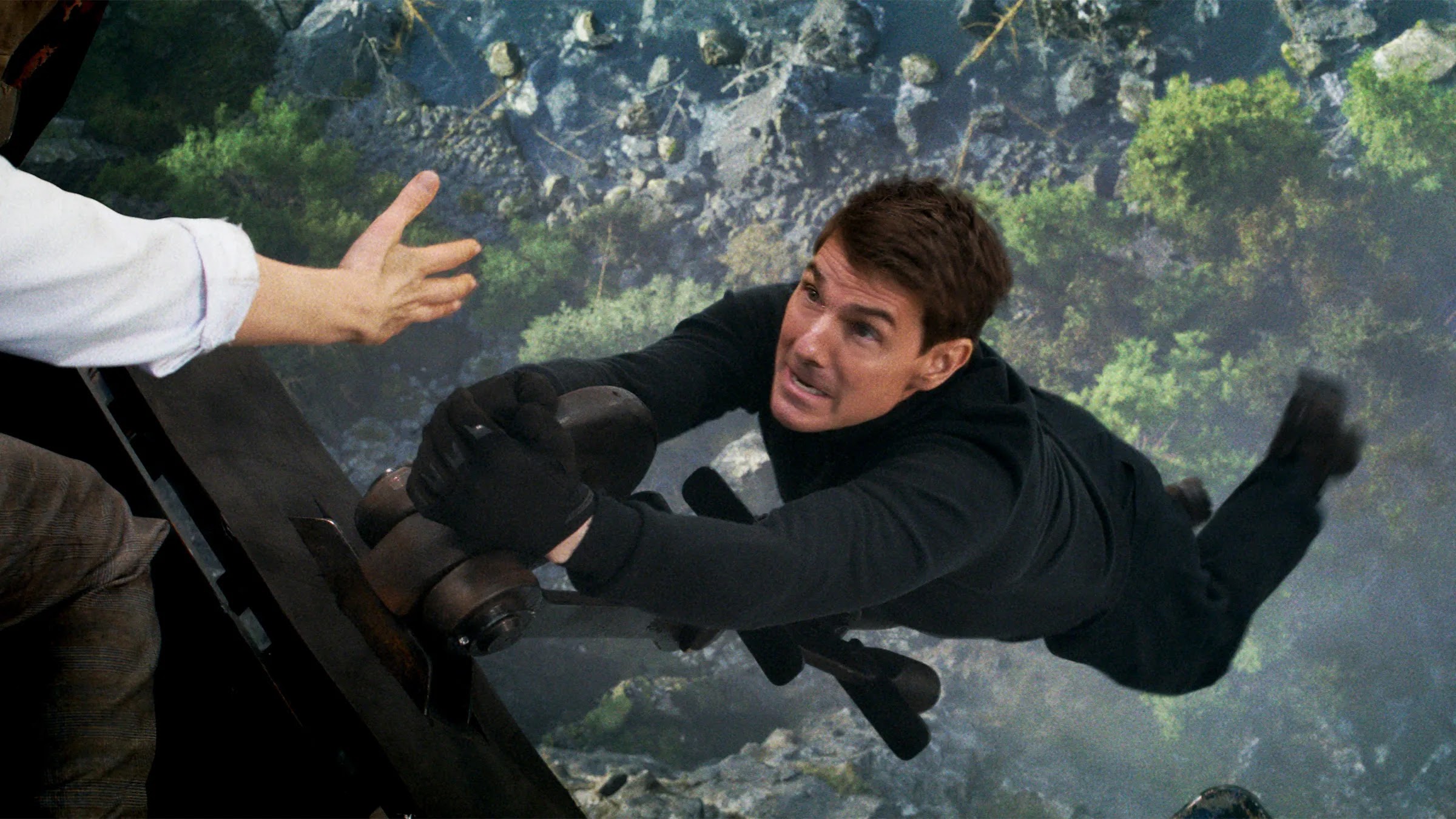
Fans of the “Marvel Reread Club” podcast know how much I love to see fighting on top of trains, and this movie has one of the greatest train fights of all time, all the more thrilling knowing that Tom Cruise keeps it real. The movie is too long, but I couldn’t complain when the climax founds ways to keep topping and topping and topping itself. I’ve talked before about how modern action movies sometimes leave you “exhausted, not exhilarated”, but this movie, which is ten pounds of fun in a five pound bag, manages to do both.

I’m so happy there’s another one coming, though it was pushed back a year by the strikes. Unfortunately, this movie, crushed by Barbenheimer, was a commercial disappointment, but I hope they don’t change anything in response. It’s my understanding that it was mostly in the can, and it would be disastrous to start second-guessing themselves now.

Thursday, February 29, 2024

Best of 2023, #7: Dumb Money

I loved Michael Lewis’s book “The Big Short” and I loved Adam McCay’s movie of it even more. I had it as my favorite movie of that year. But I had to keep reminding myself: shorters are assholes, and we shouldn’t be celebrating these guys.

In fact, between the Big Short book coming out and the movie coming out, I wrote a screenplay-for-hire where the villain had elements of the main characters in the book. I then was surprised when they turned the book into a movie and somehow convincingly portrayed the shorters as heroes. The movie worked wonderfully well: I kept forgetting how much I would hate these guys in real life.

But it was great to see this movie about the actual underdogs of the stock market, the “dumb money”, mounting a coup and pulling off the ultimate dream: squeezing the shorters. This was the feel-good movie of the year. We root for these scrappy investors, cheer when they pull off their squeeze, howl with indignation when the system screws them over and then breathe a big sigh of relief when they still pull off a bit of a win.

Everybody in The Big Short ended up a billionaire at the end of the movie, profiting off of America’s misery. Nobody in this movie makes out like that, but some of them do okay.

Ultimately, the movie comes down to a fascinating dilemma: the squeezers find that their portfolios have shot up as a result of the squeeze, but they don’t want to sell because they want to make a point, even if they lose everything. Ultimately some sell, but some, like America Ferrara’s character, decide to die on their hill. We, as viewers, can’t decide which they should do. That’s a great dilemma I’ve never seen on screen before. Ferrara got deservedly nominated for Barbie but she was also great in this.

It’s interesting that this movie came out the same year as Lewis’s new book, “Going Infinite”. In this case, the public turned on Lewis for the first time for being overly-admiring of his “maverick” subject. Everybody read the new one and simply pitied Lewis for getting duped by Sam Bankman-Fried. Lewis insisted on seeing SBF as another one of his patented rule-breaking geniuses, whereas everybody else, even if they just read Lewis’s book, could see he was merely a petty crook.

It got so bad that Lewis was featured on the great podcast “Behind the Bastards”. Robert Evans skewered Lewis quite effectively. He points out that Lewis loves it when SBF does Zoom meetings while playing video games, as if that’s a sign of his genius, but Evans points out that everybody in Gen Z does that, and Lewis just didn’t know any young people.

So this movie was the perfect movie for “the year that everybody turned on Michael Lewis.” The Big Short is great, but everybody who sees it should be forced to watch this right after.

Wednesday, February 28, 2024

Best of 2023, #8: Asteroid City

My affection for this movie (which I haven’t seen on any other year end lists) was increased by how I saw it. I was vacationing for a week in Stratford, Ontario with my family and my wife’s parents. On a night when the kids were with their grandparents, Betsy and I came across a storefront that billed itself as North America’s smallest movie theater and they were showing this movie. We couldn’t resist. We bought our refreshments, and were shepherded into a 12-seat movie house. There was a curtain that parted to reveal the screen, but it was still slightly blocking the edges of the screen. Normally, that would have been annoying, but it was perfect for a Wes Anderson movie. It was a very pleasant evening.

I think Anderson’s most underrated quality as a director is his work with actors. Some find the performances in his movies mannered, but I think that the actors actually do spectacular work, all while staying within a certain deadpan tone. I feel for his characters, even when the characters are reluctant to feel things on the surface themselves. There’s a reason he attracts such stellar casts. This movie stars, among others, Jason Schwartzman, Scarlett Johansson, Tom Hanks, Jeffrey Wright, Tilda Swinton, Bryan Cranston, Edward Norton, Adrien Brody, Liev Schreiber, Hope Davis, Steve Carell, Matt Dillon, Willem Dafoe, Margot Robbie and Jeff Goldblum, and they’re all very entertaining. You don’t attract that level of talent if you don’t know what you’re doing.

One of my favorite working actors is Maya Hawke (who’s also great in Maestro). She’s so tremendously appealing in this movie. I wish Hollywood would do more with her.

Tuesday, February 27, 2024

Best of 2023, #9: American Fiction

This is definitely the sort of movie where giving it a Best Picture nomination does it no favors. It’s a sly, funny dramedy, but a modest one. It’s nice for Jeffrey Wright to finally get a nomination, but it would be odd if he won for this, and the same with Sterling K. Brown. They’re great actors who will hopefully eventually win for meatier roles.

The movie kept reminding me of the worst-titled movie of all time, The 40 Year Old Version. I liked that movie slightly better, but they’re both good. Both have a similar skewering of white gatekeepers hungry for stories of black suffering, while making life miserable for black authors looking to tell more complex stories. I wish that movie had had some of this movie’s acclaim.

It was amusing watching this movie with my wife, who has actually served on literary award committees and kept blowing her top, saying “That’s not how awards committees work!” I think everybody says that when they unexpectedly see their profession onscreen.

The whole movie essentially builds to one very deadpan, very funny joke, when the two black authors don’t want to give the award to the parody-of-black-misery novel, but the three white authors on the committee outvote them, and justify it by saying, “We really need to listen to black voices right now.” A great example of a joke that’s entirely serious for everyone onscreen.

The movie ends in a meta way by acknowledging the tension between how it should end and how it would end. Every writer grapples with this. In real life, people avoid conflict, and things rarely climax satisfactorily. When we force things to climax, we know that we’re bending out characters out of shape. This movie cleverly has it all, giving us the good (which is to say, realistic) ending, the better (more dramatic) ending and the best (tragic) ending, then lets us choose, knowing that our choice might implicate us as being no better than the gatekeepers the film pillories.

Sunday, February 25, 2024

Best of 2023, #10: Maestro

Some thoughts:
  • I thought I was going to dislike this movie because of the make-up, which looked terrible in ads, but in the actual movie, it was fine and I forgot all about it.
  • But I kept asking “Why the 4:3 aspect ratio?” What did it mean? What was Cooper trying to say with the black bars on the sides of the screen? I can’t imagine.  I have no problem watching old movies and TV with the black bars, but I can’t figure out why any modern movie would do it.  
  • At times, this movie was quite beautiful, but there were other times I was frustrated that the camera wasn’t where I wanted it to be. Again, as with the aspect ratio, I found myself taken out of it.
  • I kept comparing the movie to Tar, which ultimately was a better movie. Conducting is a fairly silly-looking job, especially for a viewer like me who isn’t into classical music, but Blanchett did a better job selling me on its not-silliness than Cooper did.
  • Ultimately, there’s not as much drama as there could be, but I’m not sure if that’s a problem. According to the movie, Leonard Bernstein had various problems in his life and marriage, but ultimately was a pretty happy, successful guy who managed to basically get away with having it all. It’s to Cooper’s credit that he doesn’t fall into “tortured homosexual” cliches, and captures a certain joie de vivre in Bernstein’s voice in every phase of his life. Cooper’s Bernstein is a happy family man who also sleeps with men, not because of some dark compulsion but simply because it’s fun. If he was more tortured, maybe he would actually win the Oscar, but it’s probably to his credit that he won’t.
  • Carey Mulligan as Bernstein’s wife gets more drama than he does, as she eventually dies of cancer. She’s excellent, and there’s more of a case to be made that she should win, but it’s probably not her year either.

Thursday, February 22, 2024

Not on the List: Spider-Man: Preposition the Spider-Verse Part 2, Teenage Mutant Ninja Turtles: Mutant Mayhem, and Nimona

Continuing our look at the movies that didn’t make the “Best of 2023” list:

Spider-Man: Preposition the Spider-Verse Part 2 (That’s the only way I can tell this trilogy apart. I always forget the actual prepositions)

This was better than the first one, and retconned away one of the things I liked the least about that one (by retroactively explaining where Miles’s spider came from), but I still disliked this movie. We watched it in the theater when my daughter was away at summer camp, thinking she wouldn’t want to see it, but when she was home and it was streaming she asked to watch it for family movie time. I never beg out of family movie time, no matter how disinterested I am in the movie, but this time I left the room. I just couldn’t sit through this movie again.

As I watched it the first time, knowing that the movie was only part 1, I knew it could just end at any time, and indeed I wanted it to end many times. The first place I thought, “Is it going to end here?” is when they went to India. Only later did I realize that that was only about an hour in to an interminable almost-3 hour movie. Later in the list, we’ll be looking at another part 1 that was also too long, but was a thousand times better than this movie.

And more importantly, I still hated the visuals, which I thought were just as headache-inducing as the first movie. That brings me to another movie that didn’t make the list…

Teenage Mutant Ninja Turtles: Mutant Mayhem

This was a similar situation. My wife took my son to this movie, and loved it, so when it came out on streaming, she insisted we all watch it for family movie time. I can’t see why. The whole time, I was thinking, “Isn’t this just a Teenage Mutant Ninja Turtles movie?” It had big names involved, but I didn’t feel that they rose above the source material.

Most importantly, I just really dislike the current animation style. I liked Mitchells vs. the Machines with its mix of 3-D and 2-D, but I dislike all the movies that have tried to recreate that magic.

That brings us to Nimona, a very well written movie which almost made the list, but again, I wasn’t crazy about the animation style. I think that in future years, people will look back on animated movies made around this time and they’ll be so dated.

Okay, enough of the movies that didn’t make the list. Next week, let’s start in on the top ten.

Wednesday, February 21, 2024

Best of 2023: Not on the list: Ant Man 3, Guardians of the Galaxy 3 and The Marvels

None of these movies were terrible. My whole family saw Ant-Man 3 and The Marvels in the theater and we all enjoyed them. The worst knock against Ant-Man 3 was the CGI on Modok’s face, which was terrible. The Marvels had an exceedingly unmemorable villain, but was a lot of fun in its admirably-brief runtime.

I think that The Marvels wouldn’t have been the megaflop it was if they had just, once the movie was in the can, changed its name to Captain Marvel 2. Lots of Marvel movies have guest-stars that take up a lot of screentime, so it wouldn’t have been weird for Ms. Marvel and Monica Rambeau to have such big roles. The movie flopped because so many people didn’t watch (or didn’t finish) the Ms. Marvel series on Disney + (which was moderately entertaining) and felt that they wouldn’t be prepared to see a movie in which she co-starred. (And bizarrely, the marketing seemed to imply that the Marvels name applied to Monica Rambeau as well, who in the comics had the “Captain Marvel” role for a while, but never has had a “Marvel” name in the MCU.) The first Captain Marvel made a billion dollars and if they had just said, “that’s the only thing you need to have seen, come on out for Captain Marvel 2!” it would have at least made its money back.

My least favorite of the three was the one that was best received by the general public, Guardians of the Galaxy Vol. 3. I intended to take my family to this one, but we were too busy the first weekend, and then I kept hearing that it was inappropriate for children. I tested out seeing it without them and I agreed. All of the gruesome animal experimentation was totally inappropriate for families. What on earth is Marvel thinking? The movie was pretty good for adults, but I’m glad I didn’t take my family, which made it a big disappointment.

So a mediocre year for Marvel. Time to right the ship. Due to the strikes, they’re mostly taking the next year off, so let’s see how they’re doing when they return.

Monday, February 19, 2024

Introduction to Best of 2023, and Not on the List: John Wick 4

Welcome to the Best (Hollywood) Movies of 2023 List! Sometimes, I’ve included world cinema on this list, but this year I decided to stick to Hollywood, which means that the wonderful Anatomy of a Fall did not make the list. As always, I’ll start with the movies I wish I’d seen: Past Lives, Zone of Interest, Wonka, Are You There God, It’s Me, Margaret, No Hard Feelings, Wish, Elementals, and The Boy and the Heron. So don’t expect to see those either.

I will now begin with a few days of movies that I did see but didn’t make the list, and, as always, try to glean some writing advice from them:

Not on the List: John Wick Chapter 4

One movie I greatly enjoyed this year and almost made the list was John Wick Chapter 4. Ultimately it didn’t because, like so many movies this year, including some that made the list, it was too ridiculously long.

I’ve been saying throughout the year that I should move to Hollywood and get a job as the “Cut 20 Minutes Out Guy”. I could get rich, just taking the finished edits and cutting 20 minutes out just before release. (I would also have loved to take my scissors to Indiana Jones 5, another movie that didn’t make the list.)

But there was another problem as well, which speaks to one of the pitfalls of relying on irony.

Major spoilers for the movie! Stop reading here if you haven’t seen this fun movie yet.

So this movie, and this series, ends when John Wick is shot and killed in a duel with a blind assassin.

But here’s the problem: If the whole series comes down to a gun duel with a blind man, there’s only one way it can end. If our hero easily shoots and kills a blind man, that’s lame and anti-climactic. We’d say “Of course he beat the blind man in a duel!” The only way the story works is if the blind man kills him. But it’s not good to have a story that only works one way. Irony is great but it shouldn’t be the only non-lame option.

(And can we talk about how weird it was that this movie lifted characters wholesale from two other movies? Didn’t Donny Yen already play a blind assassin in Rogue One? I kept thinking, “They wouldn’t hire the same actor to play the same character? Am I just racist and I can’t tell Asian actors apart?”  Nope, it was the same actor playing the same character. And the radio DJ is lifted straight from The Warriors! I guess these were homages? Some borrowing is too wholesale to count as homage.)