Podcast

Sunday, January 16, 2022

The Expanded Ultimate Story Checklist: When the story begins, is the hero becoming increasingly irritated about her longstanding social problem (while still in denial about an internal flaw)?

Okay folks, I’ve hesitated from jumping into structure because I thought about launching into a completely different series, but I think I’ll put that one off for another couple of weeks and go ahead and do structure (except on podcast days of course.)

You’ll be happy to know that I’ve also fixed the download links for the Ultimate Story Checklist and Pilot Checklist.  Google Drive decided to convert the files to Google Docs and mangle them, so I’m now sharing them though Dropbox (which you don’t need to download them)
In real life, we tend to let a mess of troubles mount before we finally choose to act. In fact, we only take on the massive work of solving a large problem once we have been discontent for some time. So rather than start with a happy status quo that gets ruined by the inciting incident, most stories begin the opposite way: The hero starts out with a long-standing social problem, and the inciting incident (even if it’s something horrible) presents itself as an opportunity to solve that problem, as we’ll see in the next two steps. 

The long-standing social problem is usually either something the hero is already aware of when the story begins or something that suddenly becomes acute because of a social humiliation in the first scene. Because this is something the hero acknowledges early on, it must be stated in the way the hero would state it. This is because most of us define our problems externally, not internally, until we’re forced to become self-critical. In the outline version of your story, the problem should usually be phrased nonjudgmentally, as the hero would phrase it herself: The hero is “broke” or “disrespected,” or “overworked,” etc. These are the sorts of personal problems that people will admit to even if they haven’t engaged in serious self-reflection.
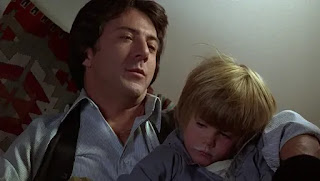
  • In Kramer vs. Kramer, it’s tempting to say Dustin Hoffman’s problem is that his wife has abandoned him and their son, but that’s not a long-standing problem that predates the story, so it doesn’t fit into this category. Alternately, one might be tempted to say his problem is that he’s not a good father, but that’s not something he’s aware of yet (it’s his flaw, not his problem). If we limit ourselves to long-standing issues he’s already aware of, we see his real problem: He’s distracted. His work takes him away from his family, and he can’t decide which is more important. As horrible as it is, the disappearance of his wife will give him just the opportunity he needs to address this problem. 
  • In Swingers, Jon Favreau’s problem is that his ex-girlfriend won’t call him back. Even though the audience can see right away that he should just move on, we can also see that, for the time being, he’s defining his problem in an entirely external way, putting all of the onus on his ex. In this case, we, like his friends, have a lot of empathy for his pain but little sympathy for his suffering, because we see he could suffer less simply by changing his attitude. 
The great flaw, on the other hand, is something internal that most heroes remain stubbornly unaware of for most of the story, and it should always be phrased negatively: The hero is “sanctimonious” or “disloyal,” etc. In other words, it should be a true flaw.

When someone asks us about our flaws, we prefer to say, “I’m too nice” or “too much of a perfectionist,” etc., because those aren’t true flaws and we don’t really want to change. A hero must have a true flaw that requires change.

When I was evaluating the classic screwball comedy Easy Living, I was tempted to say that the heroine’s flaw was that she was “too nice,” but I realized I had to look deeper to identify an actual flaw. Sure enough, I found one: She may think of herself as “too nice,” but her real flaw is that she’s too naïve and deferential. When you put it that way, it’s obvious that it’s bad. Everybody wants to be nice, but nobody wants to be naïve and deferential.

The flaw must be something that needs to change for the hero to become a better person. Otherwise, you’ll go too easy on your characters.
Straying from the Party Line: Mixed-Up Crises in How to Train Your Dragon

On first blush, this seems like a very traditional stand-up-and-cheer movie with an intensely lovable hero and a very traditional heroic journey…but a closer look reveals a strikingly odd structure.

Deviations: The crises are all mixed up:
  • Hiccup does indeed have a social crisis in the first scene, when he is blamed for getting a building burned down… 
  • But then Hiccup has his spiritual crisis very early, at the end of the first quarter, when he finds that he can’t kill the dragon.  Instead, in a flash of moral clarity, his philosophy flips from wrong to right like a light-switch, and he never doubts the right course again.
  • He has no midpoint crisis.  Instead the middle is structured like a tragedy: he is acclaimed and accepted at the midpoint, because he’s been using his time with Toothless to learn things that allow him to master the dragons he faces in his training.
  • The physical crisis (and loss of place of safety, and loss of sheltering relationship) that usually comes at the midpoint instead happens at the ¾ mark, when the spiritual crisis usually takes place.  The village discovers his dragon then takes it away to hunt down the nest.  However, this doesn’t make him question his philosophy—he’s dispirited but doesn’t feel any guilt or doubt about doing the right thing. 
Potential Problem: This brings up two big questions:
  1. First, why do the crises almost always happen in the standard order (social, then physical, then spiritual) The answer, I think, is that we only pursue dangerous opportunities after social humiliations force us to do it, and then we only change after our old ways have begun to physically endanger us.
  2. Second, what are the dangers of changing the order?  Well obviously, such a quick change of philosophy can feel unearned, and if the hero is on the right path so early, the rest of the movie can seem morally inert…right?
Does the Movie Get Away With It? Yes, it does.  The drama comes from the fact that, even though Hiccup knows the spiritual truth, his newly moral stance is in such total opposition to the beliefs of his entire society, that he still has a massive job to do, bringing others around.  He still seems like a fallible, self-deluded person to the extent that he believes he can have it both ways (befriending a dragon in private and besting them in public) until it all comes crashing down.  This is a movie about a hero who has the right morals, but is very uncertain about the most effective ethical way to spread that morality.

Most movies are parables about how to change yourself, but this is a parable about how to change your society after you’ve found the right path.  As it turns out, this is a rich topic that should be explored more often.
Straying from the Party Line: Anna’s Two Longstanding Problems in Frozen

Usually, it goes like this:
  • Our hero has one longstanding social problem, made clear by the first few scenes.
  • Then the story presents an intimidating opportunity to fix that problem.
  • Then our hero commits to pursuing that opportunity and the story begins by the ¼ point.
In Frozen, the story really begins when Anna sets off into the wilderness to rescue Elsa, but that seems to violate this pattern. She’s spent most of the movie before that searching for romantic love. She sings her “I Want” song, “For the First Time in Forever”, about her desire to find love, then flirts with Hans before and after the coronation, launching into the song “Love is an Open Door”.

But then she has her blow-up with Elsa and immediately drops everything to follow Elsa into the mountains, seemingly forgetting all about Hans. He even offers to come with, but she says no thanks. It seems that she’s abandoning her big opportunity, rather than pursuing it.

But is she actually ditching her longstanding social problem? Well, she’s ditching one of them, but if we look back, she’s had another this whole time, because she actually has two “I Want” song back to back in the opening minutes of the movie. Before “For the First Time in Forever”, she sang “Do You Want to Build a Snowman?”, in which she wanted her sister’s love.

So she has two contrasting “I Want” songs, and when events force her to choose between those wants she chooses familial love (find her sister) over the search for romantic love (enjoy her new relationship with Hans). This, of course, foreshadows the end of the movie, in which she’ll make a similar choice (this time choosing saving Elsa over kissing Kristoff to end her curse), seemingly at the cost of her life, and saving everyone as a result.

(Okay, I’ve seen this movie 20 times with my daughter, but I swear I just figured out that “Love is an Open Door” is a direct rebuke to Elsa’s closed door, so now the split is not just between familial and romantic love, it’s between hard closed-door love and easy open-door love.  The conclusion is that both are scary, but you should be especially wary of easy open-door love.)

The 40 Year Old Virgin

YES, he has a permanent erection.  His coworkers find him boring.  He is asked to interact with a female customer and cannot.

Alien

Slightly.  She clearly feels she doesn’t get enough respect, but she’s not going to say anything about it.

An Education

YES. She’s massively bored.

The Babadook

YES. Everyone is losing patience with her son (including her) but she’s in denial as to the true flaw: he inability to grieve or forgive him for her husband’s death.

Blazing Saddles

YES. He’s tired or being disprespected on the rails, and he’s unwilling to admit that his potentially-muderous anger is not helping his people.

Blue Velvet

Only slightly, in that we see him chafe and his treatment by his mom, who clearly sees him as still a kid (His real “problem” scenes were cut out in the editing room. They’re in the script that’s online, and worth reading.  We meet him already spying on a girl being almost date-raped at college, and only stopping it when someone else is approaching, then his mom tells him that not only does he have to come home, but that they won’t be able to afford college for him anymore, and he’s frustrated.  He feels that there will be no outlet for his darker impulses at home.)

The Bourne Identity

Yes and no, he discovers one immediate problem (he doesn’t know who he is) but only near the end does he discover that this was a culmination of a longstanding social problem (he was already balking at the job, and that’s what broke him)

Bridesmaids

YES. Doesn’t get to see enough of Lillian, gets no respect from lover. 

Casablanca

YES. he’s losing control: the Nazis are intruding on his bar more and more and he can stomach them less and less, (and he can no longer stomach other women, either)

Chinatown

YES. Social problem: seen as a dishonest creep. Internal flaw: too cold and cruel. 

Donnie Brasco

YES.  he’s getting in good with mob, but calls his wife and asks to hear her breathe.  

Do the Right Thing

YES. Yes, he’s sick of his sister’s nagging, sick of Pino shifting his own responsibilities onto him.  (And he’s in denial about his shiftlessness and suppressed rage)

The Farewell

YES. She does not feel at home in America and misses her grandma.

The Fighter

YES. Longstanding social problem: Can’t get good fights, trainer never shows up.  Denied flaw:  His attachment to his family is the problem.

Frozen

YES. She can’t see her sister or leave her palace to find love.

The Fugitive

Well, we have two beginnings: In the first we see glimpse of his flaw (he’s naïve about the nature of the doctor politics) but he doesn’t really have any social problems to get irritated by. In the second, in interrogation, his flaw is on display and suddenly he’s got lots of problems, social and otherwise. 

Get Out

YES. He doesn’t trust Rose that her parents will accept him (but doesn’t realize that he’s trusting them too much.)

Groundhog Day

YES. He wants to escape to a network job, doesn’t know why he gets so little respect.

How to Train Your Dragon

YES. Gets no respect in the opening battle, and tells us about his predicament in voiceover. 

In a Lonely Place

NO. in this story, he is already aware of his internal flaw, which is the same as his longstanding personal problem: his bad anger management. 

Iron Man

 If we ignore the flashforward and take things in order, then not really, or at least Tony pretends not to be troubled by the criticisms he gets, or to have any qualms. His protests to the reporter seem genuine, but we and he realize that, deep down, he really knew better when…

Lady Bird

YES. Her first line: “Do you think I look like I’m from Sacramento?”

Raising Arizona

YES. Tired of going back to prison, drawn to Ed.

Rushmore

YES. It annoys him that Dr. Guggenheim wants to kick him out.  He also begins to discover puberty.  

Selma

Yes to the problem: He’s increasingly frustrated with Johnson.  As for the flaw, he doesn’t really seem to be flawed in the first half.  His two big flaws, when they arrive in the second half, seem to come out of nowhere: the revelation of his adultery and his (possibly flawed, possibly not) decision to reverse the second march.  

The Shining

YES. Jack: Yes, he’s a dry drunk, has anger issues, hates his family, etc.  Danny: Yes, he’s determined to deal with his Tony problem.

Sideways

YES. He’s tired of being a depressed drunk.

The Silence of the Lambs

YES. Intimidated in elevator with tall agents, annoyed when the door is shut in her face when she peeks in on the Bill investigation.

Star Wars

YES. He wants to go off to flight school and feels left out, but he’s not dealing with the moral complexities. 

Sunset Boulevard

YES. he’s tired of being broke and unemployed.

Monday, January 10, 2022

Marvel Reread Club Episode 19: July, 1963

Marvel Reread Club marches into July 1963! That means Spider-Man 3, Fantastic Four 16, Journey into Mystery 94 with Thor, Strange Tales 110 with the Human Torch and the debut of Dr. Strange, Tales of Suspense 43 with Iron Man, and Tales to Astonish 45 with Ant-Man and the Wasp! Roy Orbison glasses! Acid fish! The Chromosomatic gland! The frightful two! A masterpiece Stan disowned! A second Atlantis! Jousting with iguanas! Check it out!

Friday, December 31, 2021

The Expanded Ultimate Story Checklist: Does the hero use pre-established special skills to solve problems?

Why are some stories memorable but others fade in your mind a day later? Why do some heroes win your heart while others make little impression? 

David Mamet’s thriller The Spanish Prisoner is the very definition of “fun but forgettable.” Campbell Scott has invented a process that will revolutionize his industry. Steve Martin is a con man who tricks Scott into stealing his own formula and handing it over, and then frames him for murder. Once Scott realizes he’s been tricked, he does a lot of poking around, investigating, running through alleyways, etc.

Scott is the classic Everyman hero. He shows no special skills in the first act, and he doesn’t need them to get through the rest of the movie. In the end, he just needs to reach within himself and become a little smarter, a little savvier, and a little more courageous to get out of the trap. Basically, he muddles his way out. Because the movie has a good cast, a twisty plot, and Mamet’s crackling dialogue, we may not notice right away how uncompelling Scott’s character is, but the movie has no weight to it.

Compare this to Harrison Ford in The Fugitive. Like Scott, Ford is framed for murder. He’s arrested and has to escape with Tommy Lee Jones hot on his heels. How does Ford get out of it? He doesn’t transform into a generic hero. Instead, he finds a way to use his pre-established skills to solve the problem. Since he was a doctor, he spends the entire movie in and out of hospitals, using the resources of those settings at every turn.

Audiences prefer their heroes to get out of trouble in the second act using talents they already displayed in the first act. Even heroes who seem to be starting from scratch are actually adapters. They find ways to use skills from a completely different job to surmount their current problem.

What about that supposed zero-to-hero story Back to the Future? On the surface, it seems like a story about a neophyte who’s hopelessly floundering when faced with the biggest challenge of his life. Marty has not trained to be a time traveler, nor has he studied up on the fifties. He seems totally unprepared for and baffled by this situation.

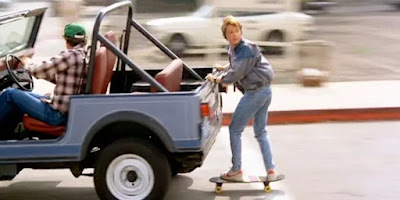
But, like most heroes, Marty does have a hidden reserve of special skills, and those are what he relies on to get out of trouble, time and time again. In this case, most of his skills, like skateboarding and playing rock guitar, shouldn’t apply to 1955, because they don’t exist yet, but he figures out how to use them anyway. He actually invents skateboards and rock and roll just so he can use them to save himself. That’s how dependent heroes should be on their pre-established special skills.

Let’s look at a complex adventure story with three competing heroes: Pirates of the Caribbean. Of the three heroes, only one is in his element: Johnny Depp is using his long-honed pirate skills. But the other two, though totally out of their element, still rely on pre-established special skills. Orlando Bloom is a blacksmith by trade, and he finds all sorts of ways to use those skills, from his experience with forging swords to his knowledge of how to pry open a cell door using a makeshift lever. Keira Knightley has never prepared for any trade, but she makes use of her copious reading about pirates and knows, for example, that they can’t turn down a demand of parley. Depp is already an expert, but Bloom and Knightley adapt using their preexisting knowledge.

Relying on past knowledge gets you past the “wouldn’t the bad guys have thought of that?” problem. There’s a good reason our hero can outsmart the villains: He knows something they didn’t know he knew (but we know he knew it, because we saw it in the opening scenes). Otherwise, in a movie like The Spanish Prisoner, where the hero doesn’t reveal any special skills, you can really only credit his success to the villain’s incompetence. It turns out that “every man” could have defeated this villain.

It is, however, crucial that a special skill be established in an organic way. When it’s set up in a clunky way, and then it comes back later, the audience groans.
  • One laughable example is the girl who gets past the dinosaurs using her parallel-bars gymnastic skills in The Lost World: Jurassic Park. 
  • Even dumber is the spy-thriller Salt, in which Angelina Jolie uses her husband’s random spider-venom advice to create a special venom bullet. 
So can you ever write a successful story about a hero with no skills whatsoever? Yes, you can, but only if things get truly harrowing for the poor unskilled hero. Horror stories sometimes have unskilled heroes, as do some stories that aren’t horror but feel like horror for the protagonist: Poor Linda Hamilton never finds a use for any of her waitress skills when fighting an evil robot from the future in The Terminator, but that’s okay because she’s just trying to survive. Ultimately, she gets saved by someone else.

Audrey Hepburn’s newly blind housewife in Wait Until Dark seems like a truly unskilled heroine. When she comes under siege by thugs who want to retrieve a heroin-filled doll that ended up in her apartment, she feels that she lacks even the basic tools of the average person. Not only does she not have any assets, but she has a huge liability. But, eventually, she decides to smash all the light bulbs and use her superior ability to navigate without light to her advantage. She turns her liability into her only asset.

You can’t become a hero by doing what anyone would do. You have to do that thing that you do.

I could go on much longer about character, but, ultimately, even if you have a wonderfully compelling hero, you still don’t have a story. These hypothetically perfect characters have to get up, get going, and test themselves.
Rulebook Casefile: Ironic Special Skills in “Get Out”

James Kennedy and I sang the praises of Total Recall on our podcast, but we didn’t mention one of my pet peeves about that movie. Arnold eventually ends up strapped to a chair: He seems to have accomplished so much, but now he discovers that everything he has done was really just bringing him into Ronny Cox’s elaborate trap. Ronny has been playing ten moves ahead this entire time, guessing everything Arnold might possibly do and effortless manipulating him into bringing in the mutant leader. Now Ronny just needs to wipe Arnold’s mind again and restore his original personality.

But then Arnold does the one thing that Ronny couldn’t possibly have predicted: he raises his arm! He then breaks the chair, and runs away.

This drives me crazy: You could predict every possible movie Arnold could make, but you couldn’t predict he would raise his arm? Arnold doesn’t use some clever trick or special weapon he’s found as a result of his journey. He just does what anyone could predict he would do, and gets away fairly easily.

Chris in Get Out faces a similar predicament. He, too, ends up 2/3 of the way into the movie strapped to a chair, outdone by a villain who has been way ahead of him and manipulating his behavior the entire movie. He is even more helpless than Arnold, because the villains only have to ding a spoon on a teacup (live or on tape) to turn him to jelly.
So how does Chris get away? Unlike Arnold, he does something clever: He plucks cotton from his chair armrests and plugs his ears. (As Peele points out in his commentary, this black man ironically picks some cotton to avoid slavery.)  Assuming that he’ll be unconscious, Jeremy then frees him to take him to surgery, but Chris springs to life and knocks out Jeremy with a bocce ball.

But couldn’t the villains have predicted that, too? Why would they put him in a place where he would have access to cotton stuffing with which to plug up his ears? And wouldn’t a previous captive have figured out the same thing?

But this brings us to another very ironic special skill: When Chris is being hypnotized, he flashes back to when he was a child, watching TV, correctly fearing his mom had been in an accident, but doing nothing. We see that he was betraying his anxiety in only one way: He was obsessively scratching at the armrest of the chair he was sitting on. As he’s being hypnotized by Missy, he starts to do the same thing, but Missy doesn’t notice. When he’s in the basement, hypnotized off and on for days, he naturally does it again, until he’s ripped open the leather and exposed the cotton.

In a thriller, it’s essential to establish early on the special skills that will allow your hero to get out of trouble later, preferably something the villain could not guess that the hero would know how to do. Total Recall failed to do this, but Get Out does it in a very ironic and odd way. Missy does not suspect Chris’s real superpower: The obsessive ability to scratch open armrests, given enough time. Sorry I'm running late, but you’ll get four posts next week!
Straying From the Party Line: The Not-Quite-Everyman Hero of The Fugitive

When I first gave my rules about not allowing your hero to be an everyman, I cited The Fugitive as an example of how to do it right, and Richard Kimble does indeed avoid that dreaded label…but just barely. At the time, I focused on Kimble most unique aspect: his special skills.

As director Andrew Davis says in the commentary, “The idea of Richard Kimble the doctor using hospitals to take care of his wounds, find the one-armed man, his intelligence is all tied into his being a doctor and knowing how to operate, literally operate, in a hospital.” In weaker thrillers, the falsely-accused schmuck simply transforms into a superhero as soon he goes on the run, but in this movie, the hero solves his problems in a way that is unique to his character.

But we should also acknowledge that there are many aspects of Kimble’s character that do make him seem generic and/or unengaging, and clearly violate our rules:
  • He’s incredibly passive at first, both in his normal life and in the aftermath of his wife’s murder.
  • He has a “blink and you’ll miss it” moment of humanity, when he mumbles that he always feels like a waiter in a tux. I had to watch the beginning twice to spot it.
  • He’s not frustrated with a social problem (until he loses everything)
  • Both in daily life and after the crime, he’s not especially curious about what’s really going on (and we later find they’re related). Even as late as the third act, he doesn’t really suspect that they’re a conspiracy out to get him until he’s already exposed it.
  • His reactions are notably less volatile than the average person. He literally refuses to take a step in the right direction until he’s about to be run over by a train!
  • This one’s always a problem in these sorts of movies: After the crime, he’s over-motivated, which means that he isn’t doing something that’s hard to want to do. It’s a tricky line, because heroes need a strong, clear and not-selfless motivation, and he certainly has that, but if you tip too far, then the hero doesn’t get to make any choices.
  • He’s inarticulate and unable to convince anybody of anything verbally.
And yet, Kimble is a wonderful hero. Why? Most obviously, it’s because of his specificity, such as with the doctor skills, metaphor family, argument tactics, etc. but there are other reasons as well:
We fully engage with and sympathize with Kimble, but, thankfully, we don’t have to fully identify with him, which would be hard to do for all of the problems listed above. We would too frustrated by Kimble’s passivity and lack of curiousity if we didn’t have Gerard, who serves as both antagonist and co-hero and has all of the likable qualities that Kimble lacks: he’s active, volatile, hyper-competent, verbally-incisive, and very curious (he lies when he says he’s not trying to solve a puzzle. It’s more accurate to say that he’s trying not to solve a puzzle, but he can’t resist.)

The next big factor is, of course, Ford. As with Matt Damon in The Bourne Identity, Ford’s performance obviates the need for many of the traditional likability tricks simple because he’s so effortlessly compelling. The producers submitted this script to Ford three times over five years, and he turned it down each time, so they simply kept rewriting it until they could win him over. They knew they needed his qualities.

The 40 Year Old Virgin

YES. Just barely: he uses his sleight-of-hand abilities to win over Trish’s daughter.  He uses his online-poker skills to make friends with the guys.

Alien

YES, she knows the ship and the rules better than anyone else, even the captain.

An Education

Sort of. She uses her knowledge of classical music and art to get into a tonier world, but that creates more problems than it solves.

The Babadook

YES. Amelie tries and fails (using the same type of medications she uses at work) Samuel does and succeeds: He’s been preparing for this fight for a while, building his own machines.

Blazing Saddles

YES. He’s an almost-magical trickster with the ability to run circles around racists.

Blue Velvet

Somewhat: he uses the bug spray to get in, etc.

The Bourne Identity

YES. very much so, even though he doesn’t remember where or how he got them.

Bridesmaids

YES. Uses baking skills to get her man.

Casablanca

YES. Both his shady associates and his history with the resistance will be useful to him.

Chinatown

YES. Yes, he’s a master detective, and he was a cop before that. 

Donnie Brasco

YES.  knows how to evaluate jewelry. We learn in the special features that the real life Donnie was sent to a six-month jewelry program, but it’s never mentioned in the movie.  That’s okay because we can guess it.

Do the Right Thing

NO. Not really.  He’s not solving a lot of problems.

The Farewell

NO. Not really.  I mean, you could say she uses her writing skills to fake the document, but not really. 

The Fighter

YES. he learned his boxing philosophy as a child.  

Frozen

NO. She’s an everywoman with few skills. 

The Fugitive

YES. Very much so.  Davis from the commentary: “The idea of Richard Kimble the doctor using hospitals to take care of his wounds, find the one-armed man, his intelligence is all tied into his being a doctor and knowing how to operate, literally operate, in a hospital.”

Get Out

YES. He finds his camera flash very useful.  Also,  even since the night his mother died, he’s had a nervous tick of scratching at the arms of chairs, and that ironically saves him.  Even more ironically, once he’s scratched open the chair, he then picks the cotton from inside it, which Peele implies in his commentary is Chris drawing on some racial memory.  

Groundhog Day

NO.  he pretty much does what anybody would do.

How to Train Your Dragon

YES. He uses his blacksmith skills to make weapons, make an appendage for the dragon, etc. Uses his ability to draw to make friends, design devices.

In a Lonely Place

YES. “It was his story against mine…Of course, I told my story better.”  “I’ve had a lot of experience in matters of this kind, I’ve killed a lot of people…in pictures.”

Iron Man

YES. Very much so. Even in the final fight, he uses his engineering skills to figure out the right part to rip out of Stane’s suit (“that looks important”)

Lady Bird

YES. To a certain extent.  Her lack of skills is part of her problem.  But she shows uncommon social ability to navigate different worlds. 

Raising Arizona

YES. Armed robbery, which he resorts to again and again.

Rushmore

YES. He attacks Blume with bees, etc.

Selma

YES. He explains that he’s learned how to antagonize southern sheriffs into violence.  

The Shining

No for Jack, who does what anyone would do.  Very much yes for Danny.

Sideways

YES. He wins Maya over with his wine knowledge and his novel.

The Silence of the Lambs

YES. Knowledge of dress-making, knowledge of how small town people think.

Star Wars

YES. Mainly just second hand (he boasts and others compliment him “I understand you’ve become quite a good pilot yourself.”), but we see his innate talent for the force when he practices his lightsaber. 

Sunset Boulevard

YES. he gets both romances using his screenwriting abilities.